Best Travel Deals 2026: Where the Savings Actually Are

Discover how to find the best travel deals in 2026, from cheap flights and hotels to attractions, eSIMs, and travel essentials, while saving money and traveling smarter.

We compare offers from trusted travel partners. Some links may earn us a commission at no extra cost to you.
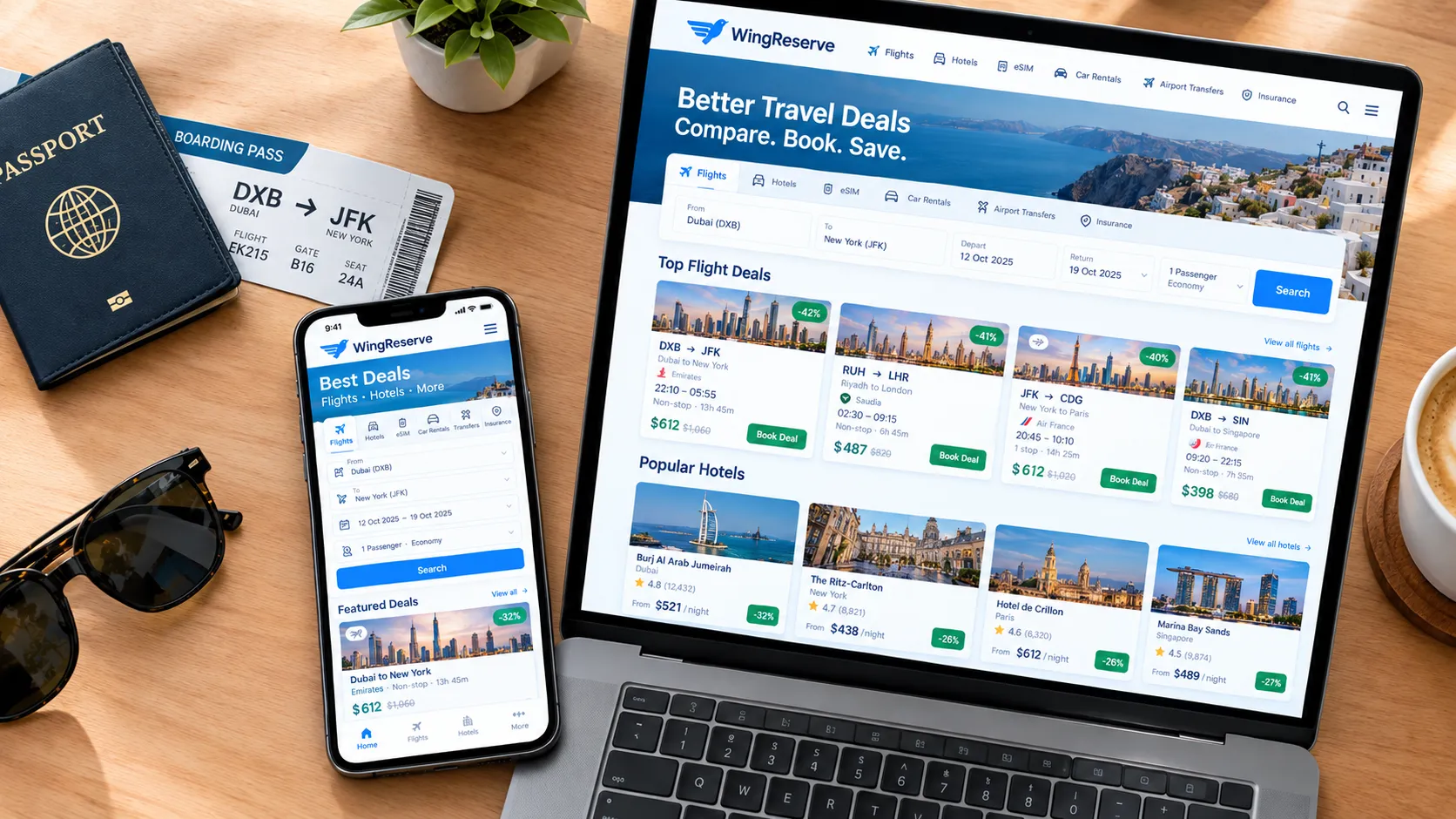
best travel deals 2026 displayed on a smartphone and laptop showing flight and hotel comparison options

Introduction

Traveling in 2026 is smarter, faster, and more flexible than ever. With more airlines, booking platforms, and travel services competing for attention, travelers can access better travel deals, if they know where and how to look.

Whether you’re planning a weekend getaway or a multi-country adventure, understanding how to compare flights, hotels, and experiences can save you hundreds of dollars.

What Are Travel Deals in 2026?

Travel deals today are not just about cheap flights. A real deal combines:

  • Competitive pricing
  • Flexible cancellation policies
  • Reliable providers
  • Good overall value

Smart travelers compare flights, hotels, attractions, and essentials together instead of booking everything separately.

Why Travel Deals Matter More Than Ever

Prices now change based on demand, seasonality, and even time of day. Two travelers can search the same trip and see different prices.

The real advantage comes from comparing options, understanding policies, and choosing value — not just the cheapest number.

How to Find the Best Travel Deals in 2026

1. Compare Before You Book

Never rely on one website. Prices and conditions vary between providers, and extra fees often appear only at checkout.

2. Stay Flexible

Flexible travel dates, nearby airports, and shoulder seasons can reduce costs dramatically.

3. Bundle Smartly

Flights, hotels, and activities often cost less when planned together rather than separately.

Cheap Flights: How to Get the Best Deals

Finding cheap flights in 2026 is about strategy, not luck:

  • Book early for international trips
  • Use flexible date searches
  • Compare baggage and change policies
  • Track prices before booking

Hotel Deals: Save Without Sacrificing Comfort

The best hotel deal is not always the cheapest one. Focus on:

  • Location and transport access
  • Free cancellation
  • Included services (Wi-Fi, breakfast)

Attractions & Activities

Attractions often make up a large part of your budget. Booking in advance and comparing providers helps avoid overpaying.

eSIMs, Transfers & Travel Essentials

  • eSIM: Avoid roaming fees and stay connected instantly.
  • Transfers: Pre-book for convenience and fixed pricing.
  • Insurance: Protects your budget from unexpected costs.
  • Luggage storage: Ideal for early arrivals or late departures.

The Costs That Are Never in the Advertised Price

Most of what travellers lose is not to a bad deal — it is to costs that appear after the booking is confirmed. Four of them account for almost all of it.

City and tourist taxes. Charged per person, per night, and collected at the property rather than by the booking platform. They never appear on your confirmation, and in several European cities they are requested in cash at checkout. A room that looks cheaper can cost more once the tax band is factored in.
Baggage on the return leg. Airlines price bags separately in each direction, and the cheapest outbound fare often carries the most expensive return baggage. Add both before comparing a budget carrier against a full-service one.
Resort and facility fees. A mandatory daily charge for wifi, pool or gym access — things most guests assume are included. Common in the United States and resort destinations, and collected at the property.
Roaming on the first day. The single most avoidable cost on this list. A week of carrier roaming runs to a large multiple of a travel eSIM for the same period, and the charge starts the moment the plane lands.

How to Spot Real Travel Deals

Green Flags:
  • Transparent pricing
  • Clear refund policies
  • Trusted partners
Red Flags:
  • Hidden fees
  • No customer support
  • Prices changing at checkout

Smart Travel Planning Checklist

  • Compare flights and baggage rules
  • Check hotel flexibility
  • Book attractions early
  • Set up eSIM before travel
  • Estimate total trip cost

Final Thoughts

The best travel deals in 2026 come from smart comparison, flexible planning, and choosing value over hype. With the right approach, you can travel better, spend less, and enjoy the journey more.

Start With the Service You Need First

Comparing everything at once is how people end up booking nothing. Pick the decision that comes first in your trip and work forward from there.

  • Compare flights — usually the largest single cost, and the one that sets your dates
  • Compare hotels — once the dates are fixed, and remember the city tax is not in the rate
  • Travel eSIM — install before you fly, not after you land
  • Travel insurance — buy when the trip is booked, since cancellation cover starts from the policy date
  • Airport transfers — the last thing to book and the easiest to get wrong on a late arrival
Compare Flight Prices

This article contains affiliate links. If you book through one of them we may earn a commission, at no extra cost to you. It does not change the prices shown or which providers appear here. Rates, taxes and availability change constantly — confirm the total at checkout before you pay.

❓ Frequently Asked Questions

Timing, myths, and how to tell a real discount from a rounded-up original price.

How do I know a travel discount is real?

Check the same thing somewhere else before you believe the discount. A strikethrough price is set by the seller and is often a rounded-up figure nobody ever paid. The reliable test is to search the identical route, room or plan on a second site and compare the total at checkout, not the headline. If the discounted price matches what everyone else charges as standard, it is not a discount.

When is the cheapest time to book a flight?

There is no single number, and any site quoting an exact day count is oversimplifying. The right window depends on the route, the season and how much demand there is. The method that works is to start watching the price early, learn what a normal fare looks like on your route, and book when a price sits clearly below it — rather than waiting for a perfect one that may not come.

Does incognito mode make flights cheaper?

No. This is one of the most widely repeated travel myths. Airline pricing changes with demand, seat inventory and how close the departure is, not with your browsing history. Prices do move between searches, which is why the myth persists, but clearing cookies does not cause the drop. What does help is comparing across more than one site, since the same seat is routinely priced differently.

What is a mistake fare?

A fare published at the wrong price, usually through a currency or system error, and sold before it is caught. They are real and they are genuinely cheap, but they are also short-lived — often bookable for hours rather than days — and airlines sometimes cancel the tickets afterwards. If you book one, avoid making non-refundable plans around it until the ticket is confirmed by the airline.

Are travel deal sites worth paying for?

It depends entirely on how flexible you are. A paid alert service pays for itself the first time you take a fare it surfaces, but the alerts are broad by design and most will not match a fixed set of dates. Start with a free tier for a month or two. If nothing usable arrives for your home airport in that time, a paid tier will not change it.

Is it cheaper to book flights and hotels together?

Sometimes, and it is worth pricing both ways before deciding. Package rates can be genuinely lower, but they also pair a good flight price with a hotel you would not have chosen on its own. Booking separately also means a problem with one leg does not complicate the other, which matters more on longer trips.

What is the best time to book a hotel?

It depends on supply. In cities with limited accommodation or a short high season, booking early protects both the price and the availability. In cities with a large hotel stock, last-minute rates often fall as properties fill unsold rooms. Book early when you need a specific hotel or travel in peak season, and watch prices when your plans are flexible.

Why is the price different at checkout?

Usually taxes, fees or a currency conversion applied at the final step, and occasionally a fare that sold out while you were browsing. This is the moment to compare rather than to hurry — a rate that looked cheapest on the search page frequently is not once the total appears. If the increase is not explained anywhere on the page, that is a reason to look elsewhere.

Do I need to book attractions in advance?

For major sites with timed entry, yes — and the saving is in time rather than money. Booking ahead is often the difference between walking in and queuing for two hours, particularly in peak season. Be aware that skip-the-line tickets usually skip the ticket queue, not the security queue, which is a distinction that catches people out.

What is the biggest avoidable travel cost?

Carrier roaming, by a wide margin. It is the one cost that is entirely avoidable with two minutes of preparation — a travel eSIM installed before departure costs a fraction of a week of roaming, and the roaming charge starts the moment you land. After that, baggage fees on the return leg and city taxes collected at the hotel account for most of the rest.

Prices, taxes and availability change constantly. Confirm the total at checkout — including any charge collected at the property or the airport — before you book.