Airport Transfer vs Taxi, Train or Rental Car: Where the Maths Actually Flips
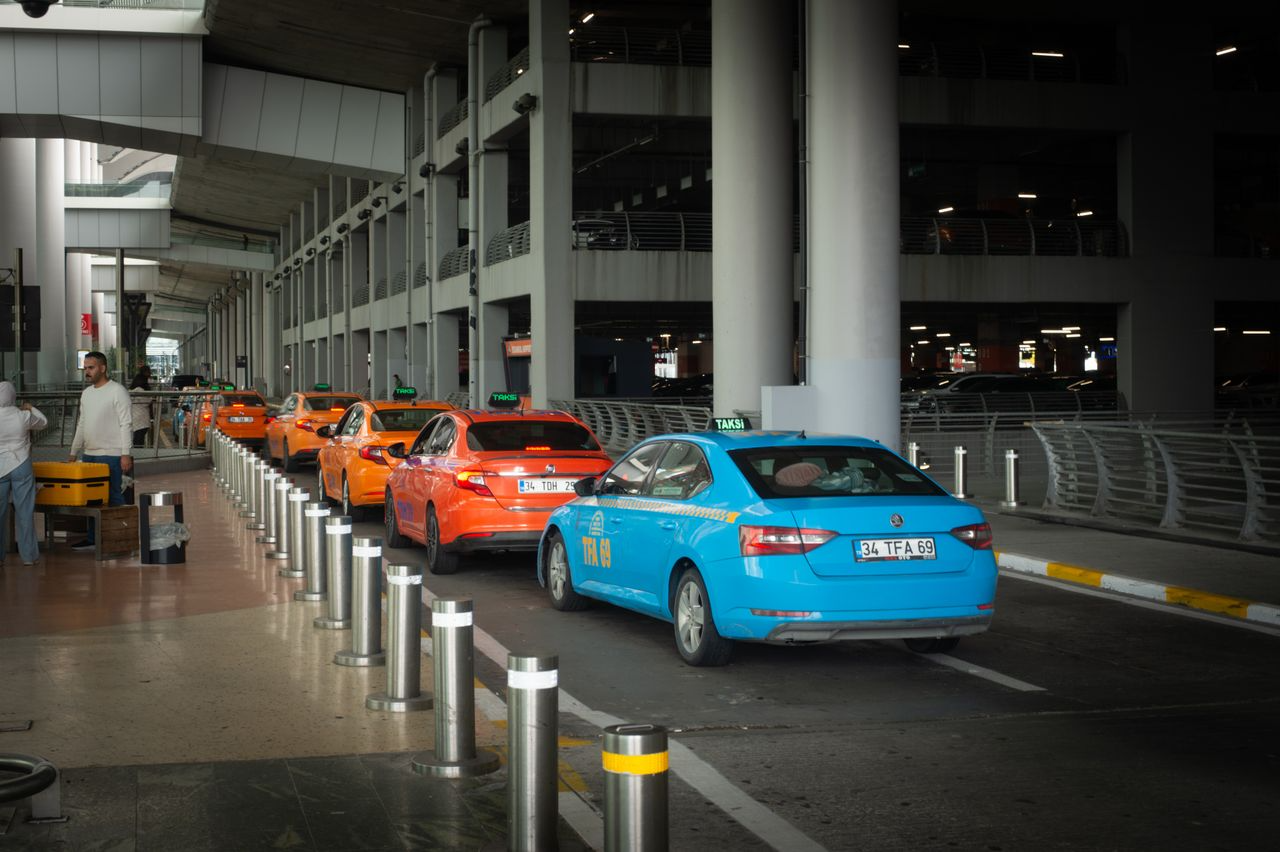
You land, you open your phone, and you ask the same question every traveller asks: what is the cheapest way from the airport to the city centre?
It is the wrong question — or rather, it is an incomplete one. The airport transfer vs taxi decision does not have one answer. It has an answer per group size. A train that is unbeatable for a solo traveller becomes one of the most expensive options on the page once four people are buying tickets, because trains charge per person and cars charge per vehicle.
That single distinction is what this guide is built on. Below you will find the real 2026 fares for four of the world's busiest airport routes, the point at which each option overtakes the others, and a method you can apply to any airport in the world.
The Quick Answer
If you want a decision in ten seconds, find your row.
| Your situation | Usually the best choice |
|---|---|
| 1 traveller, carry-on only, daytime arrival | Train or metro |
| 2 travellers, 2 bags, daytime | Train — unless your hotel is far from a station |
| 3 travellers with luggage | Taxi or private transfer — the maths has usually flipped |
| 4+ travellers, 4+ bags | Private transfer or minivan, almost always |
| Arrival after the last train | Pre-booked transfer, or taxi if a fixed airport fare applies |
| Travelling with young children | Transfer with pre-booked child seats |
| Multi-city trip, several destinations | Rental car — but read the parking section first |
| Solo business traveller, expense account, time-critical | Express train, then judge |
Everything below explains why each row says what it says — and shows you the exact fares behind it.
Why "Cheapest" Depends Entirely on How Many of You There Are
There are only two pricing models in airport ground transport, and almost every mistake travellers make comes from confusing them.
Per-person pricing. Trains, metros, buses and shared shuttles charge each traveller separately. Your cost rises in a straight line: two people cost double, four people cost quadruple.
Per-vehicle pricing. Taxis, private transfers and rental cars charge for the car, not the seat. Whether you put one person or four in it, the fare barely moves.
This produces a crossover. On any route, there is a group size at which the per-vehicle option becomes cheaper per head than the per-person option — and travel advice that ignores this will confidently recommend the train to a family of four who would pay less, arrive faster and carry nothing by taking a car.
That crossover point is what we call the break-even group size, and it is different at every airport.
The Second Variable Nobody Prices: The Last-Mile Leg
A train fare is not the full cost of taking the train. It is the cost of getting to a station that may be nowhere near your hotel.
If your accommodation is a fifteen-minute taxi ride from the terminus, add that fare to the train ticket before comparing. On several of the routes below, that single addition is enough to move the break-even down by a whole person.
Total Trip Cost: The Four Formulas
Compare like with like by building each option's true total, not its headline fare.
Build the real total, not the headline fare
Train, metro or bus
- (ticket price × passengers)
- + last-mile taxi or metro to your door
- + any airport rail supplement
Taxi
- Flat fare (if one applies), or base fare + distance + time in traffic
- + airport pickup surcharge
- + tolls
- + night / peak / extra-passenger supplements
- + customary tip where applicable
Private transfer
- Quoted vehicle price
- + optional extras (child seat, extra stop, oversized luggage)
- = final price, fixed at booking
Rental car
- Daily rate × days
- + fuel
- + tolls
- + city parking × nights
- + insurance excess or waiver
- + young/additional driver fees
- + one-way drop-off fee if applicable
The rental formula is the one that catches people out. A €25-a-day car in Rome or Paris can quietly become the most expensive option in this article once central parking is added — a point we return to below.
Break-Even by Airport: Four Worked Examples
All fares below were checked in August 2026 against airport authority, transit operator and regulator sources. They are indicative starting points, not quotes. Fares change, and you should confirm the live price before booking.
London Heathrow → Central London
Heathrow is unusual because it offers four genuinely different rail products at four different prices.
| Option | Price (1 person) | Pricing model | Journey time |
|---|---|---|---|
| Piccadilly line (Tube) | ~£5.90 | Per person | 50–60 min |
| Elizabeth line | £15.50 flat | Per person | ~30–35 min |
| Heathrow Express | £25 walk-up (from £10 booked ~45 days ahead) | Per person | 15 min to Paddington |
| Black cab (metered) | £75–£130 | Per vehicle | 45–75 min |
| Uber / Bolt | £45–£90, surges | Per vehicle | 45–75 min |
| Pre-booked private transfer | From ~£48 | Per vehicle, fixed | 45–75 min |
Where it flips. Against the Elizabeth line at £15.50 per head, a pre-booked transfer at around £48 breaks even at roughly three to four passengers. Against the Heathrow Express at £25 walk-up, it breaks even at two.
Two details matter here. First, TfL removed the cheaper off-peak Heathrow fare on 1 March 2026, so the Elizabeth line is now a flat £15.50 at every hour — there is no longer a quiet time to travel cheaply. Second, children under 11 travel free on the Elizabeth line, while under-16s travel free on the Heathrow Express, which can make the more expensive train the better family buy. Run your own numbers before assuming.
Verdict: solo and couples, take the Elizabeth line. Three or more with luggage, price a transfer — it is frequently cheaper and always easier.
Paris Charles de Gaulle → Paris
CDG is the clearest illustration in this guide, because French law sets the taxi fare.
| Option | Price (1 person) | Pricing model | Journey time |
|---|---|---|---|
| Bus 350 / 351 | €2.50 | Per person | 60–90 min |
| RER B train | ~€14 | Per person | 25–35 min |
| Official taxi | €56 Right Bank / €65 Left Bank, fixed | Per vehicle, up to 4 people | 40–75 min |
| Uber / Bolt | €55–€75, varies | Per vehicle | 40–75 min |
| Private transfer | €70–€120 | Per vehicle, fixed | 40–75 min |
The official flat fare is the key fact. It is set by prefectural order, it covers up to four passengers and all luggage, and it applies around the clock with no night surcharge on the fare itself.
Where it flips. At €14 per person on the RER B versus a fixed €56 taxi, the break-even lands almost exactly at four passengers. A family of four pays €56 either way — and the taxi delivers them to the door with their suitcases instead of through the RER B's stairs and turnstiles. This is the cleanest real-world example of an airport transfer for a family of four being cheaper than the train, or at minimum equal for far less effort.
A trap in older guides: the Roissybus to Opéra stopped running on 1 March 2026. Any article still recommending it has not been updated, which tells you something about how much of this advice is maintained.
Rome Fiumicino → Rome
| Option | Price (1 person) | Pricing model | Journey time |
|---|---|---|---|
| FL1 regional train | €8 | Per person | ~30 min (does not stop at Termini) |
| Leonardo Express | €14 | Per person | 32 min, non-stop to Termini |
| Official taxi | €55 fixed within the Aurelian Walls | Per vehicle | 50–60 min |
| Uber | €60–€80 | Per vehicle | 50–60 min |
| Private transfer | Varies, fixed at booking | Per vehicle | 50–60 min |
Rome's fixed fare is published by Aeroporti di Roma, the airport authority, and includes luggage and all supplements. Other official fixed fares run from the same rank: Ostiense €50, Tiburtina €60.
Where it flips. Leonardo Express at €14 per head versus a €55 fixed taxi breaks even at four passengers. But note the FL1 at €8 — if you are staying in Trastevere or Ostiense, the cheaper train also happens to be the more convenient one, and the break-even rises accordingly.
Timing matters more here than elsewhere. The last Leonardo Express leaves the airport late in the evening and service does not resume until early morning. Outside those hours the fixed-fare taxi and the pre-booked transfer are your only realistic options — and the €55 fare still applies, with no legitimate night surcharge.
New York JFK → Manhattan
JFK is where headline fares are most misleading.
| Option | Price (1 person) | Pricing model | Journey time |
|---|---|---|---|
| AirTrain + subway | ~$11.75 | Per person | 60–80 min |
| AirTrain + LIRR | ~$14–16 | Per person | 35–45 min |
| Yellow cab | $70 flat — realistically $90–$115 all-in | Per vehicle | 45–75 min |
| Uber / Lyft | $45–$75 off-peak, $80–$120+ surging | Per vehicle | 45–75 min |
| Shared van | ~$35 per person | Per person | Varies |
The famous $70 flat fare set by the Taxi and Limousine Commission is real, but it is a floor, not a total. Add the state congestion surcharge, the MTA pass-through, tolls, a $5 weekday rush-hour surcharge between 4pm and 8pm, and a customary tip, and the honest number is $90–$115.
Where it flips. Against AirTrain + LIRR at roughly $15 per head, a $95 all-in cab breaks even at about six passengers — which is more than a yellow cab holds. This is the exception that proves the rule: at JFK, rail is genuinely hard to beat on price for almost any group that can carry its own bags.
But — and this is the part the price table cannot show — the flat fare is surge-proof. Rideshare on a Friday evening or Sunday night can exceed the cab by a wide margin, at exactly the moment you least want to negotiate with an app. Is Uber cheaper than a transfer from the airport? Off-peak, often yes. At peak arrival hours, frequently not.
The Break-Even Table at a Glance
| Airport | Cheapest rail (per person) | Fixed / typical car fare | Break-even group size |
|---|---|---|---|
| Heathrow (vs Elizabeth line) | £15.50 | ~£48 transfer | 3–4 people |
| Heathrow (vs Heathrow Express) | £25 | ~£48 transfer | 2 people |
| Paris CDG | €14 (RER B) | €56 fixed taxi | 4 people |
| Rome Fiumicino | €14 (Leonardo Express) | €55 fixed taxi | 4 people |
| New York JFK | ~$15 (AirTrain + LIRR) | ~$95 all-in cab | 6 people — rail usually wins |
Fares checked August 2026. Break-even assumes no last-mile taxi from the station. Add that leg and every figure above shifts down by roughly one person.
Once the maths points toward a car, a fixed price booked against your flight number removes both the surge risk and the queue. Compare vehicle classes and waiting policies before you land.
The Five Variables That Move the Break-Even
The tables above assume a standard case: daytime arrival, moderate luggage, city-centre destination, one way. Change any of those and the answer moves.
1. Group Size — Where the Maths Flips
Already covered, but worth stating as a rule: every additional traveller pushes the answer toward a car, and never away from it. Per-vehicle pricing does not care how many of you there are, up to the vehicle's capacity. Per-person pricing cares about nothing else.
2. Luggage — The Constraint People Underestimate
This is the variable that most often overrides price entirely.
A standard sedan taxi seats four but realistically holds two to three large suitcases, not four. A group of four with a suitcase each does not fit in one car, regardless of what the seat count says. The moment you need two vehicles, the per-vehicle advantage halves and the comparison has to be run again.
So — can I fit 4 suitcases in a taxi? Usually not comfortably, and in many cities not at all. You need a minivan, which you generally cannot summon from a rank on demand but can reserve in advance.
Trains have the mirror problem. How much luggage can you take on the airport express train? Formally, most airport rail services are generous. Practically, at 08:00 on a weekday with commuters standing, wrestling four large cases through a turnstile, onto a platform and into a crowded carriage is a different experience from what the fare table implies. Airport-dedicated services like the Heathrow Express and Leonardo Express are built for luggage; ordinary metro and regional lines are not.
Rule of thumb: one large case per person is the point at which rail starts to lose on comfort even when it wins on price.
3. Arrival Hour
Ground transport is not priced or provisioned evenly across the day. Three things change after roughly 23:00:
- Rail services stop, sometimes several hours before the airport does
- Rideshare supply falls while demand concentrates, producing the worst surge of the day
- Taxi ranks can empty at smaller airports, though major hubs maintain 24-hour service
The valuable detail is that regulated flat fares usually do not change at night. Rome's €55 and Paris's €56 apply at 03:00 exactly as they apply at 15:00. Where such a fare exists, a late arrival costs you nothing extra by taxi — while the same arrival can double a rideshare quote.
Where no flat fare exists, a late-night airport transfer booked in advance is generally the cheapest predictable option, because you lock the price before the surge window opens.
4. Distance and Traffic
Distance affects metered fares and fixed fares completely differently. A metered taxi in heavy traffic charges you for time as well as distance — a rush-hour arrival can add a meaningful amount to the same journey. A fixed fare or a pre-booked transfer does not move at all.
This means traffic risk is a hidden cost of metered options, and it is highest precisely when arrivals cluster: weekday mornings and Friday evenings.
5. One-Way Versus Round Trip
Most travellers price the arrival and forget the departure, then discover that booking a pickup from a city address at 05:00 is considerably harder than finding a taxi at an airport rank.
If you will need a car in both directions, price the round trip. Many transfer operators discount return bookings, and the departure leg is where a pre-booked vehicle earns its money — a driver who arrives at your door at dawn is worth more than one who meets you at an airport where a hundred alternatives are queued outside.
What Happens If Your Flight Is Late
This is the question that decides more bookings than price, and it is worth answering precisely. Do transfers wait if my flight is delayed?
| Mode | What happens when you land two hours late |
|---|---|
| Train / metro | Runs as scheduled. If you land after the last service, it simply is not there. No recourse. |
| Taxi at the rank | Available whenever you arrive at major hubs. No booking to lose. Queue length is the only variable. |
| Rideshare | Available, but priced at whatever the market is doing when you actually land. A two-hour delay can move you from off-peak to surge. |
| Pre-booked private transfer | Reputable operators track your flight number and adjust the pickup automatically, with a free waiting window built in. |
| Rental car | Desks may close overnight. A late arrival can mean the counter is shut and your reservation is unfulfilled. |
This is the strongest honest argument for pre-booking, and it has little to do with price. When you book a transfer against a flight number, the operator absorbs the delay risk. When you book nothing, you absorb it — and you absorb it at 01:00 in an unfamiliar airport, which is the worst possible moment to be making a fresh decision.
Check two things in the terms before you book: how long the driver waits after landing, and whether waiting time beyond that is charged. Confirm the operator's stated policy rather than assuming — practices differ.
If a missed connection or a long delay is a real risk on your itinerary, it is also worth checking whether your policy covers the knock-on costs — see our comparison of travel insurance companies and what they actually cover for delays.
Luggage Capacity: What Each Vehicle Class Actually Holds
Booking a car that cannot fit your bags is the most avoidable mistake in this entire decision.
| Vehicle class | Passengers | Realistic large suitcases | Best for |
|---|---|---|---|
| Standard sedan / saloon | Up to 4 | 2–3 | Couples, light packers |
| Estate / station wagon | Up to 4 | 3–4 | Families with moderate luggage |
| Minivan / MPV | 5–7 | 5–6 | Families, groups, sports equipment |
| Minibus | 8–16 | 8+ | Tour groups, large parties |
Two notes. Passenger capacity and luggage capacity are separate limits, and you must satisfy both. And in cities where child seats are legally required, rideshare may not be a viable option at all, while transfer operators will fit seats to order if you request them at booking. If you are travelling with young children, check the local rule before you assume you can hail a car on arrival.
When a Rental Car Wins — and the Cost That Usually Kills It
A rental car is rarely the right answer for a city break, and frequently the right answer for everything else.
It wins when:
- You are visiting several towns or regions, not one city
- You are staying outside the centre, or somewhere transit does not reach
- Your trip runs a week or more, so the daily rate is spread thin
- You are a family with luggage and multiple daily journeys
It loses when:
- You are staying in a historic city centre with restricted traffic zones
- Parking costs more per night than your ground transport would have cost in total
- You are there for two or three days and will not drive most of them
The arithmetic that decides it is almost always parking. A cheap daily rate plus central city parking for four nights can exceed two airport transfers plus a week of metro tickets. Before you book, price the parking at your actual accommodation — not the airport rental rate — and add it to the daily total. That one calculation resolves the question in most cases.
Also budget for fuel, tolls, the insurance excess waiver, any additional-driver fee, and a one-way drop-off charge if you are not returning the car to the same location.
Airport desks are rarely the cheapest option, and one-way drop-off fees vary enormously between suppliers. Compare before you land, then price your accommodation's parking before you commit.
Run the Maths Yourself: A Template for Any Airport
You can apply this to any route in the world in about five minutes.
- Find the per-person rail fare. Use the airport's official website or the transit operator, not a blog. Note whether an airport supplement applies.
- Find the per-vehicle car fare. Check whether a regulated flat fare exists. Many major airports have one, and where it exists it is the most reliable number available.
- Add the last-mile leg. How far is your accommodation from the rail terminus? If it is more than a short walk, add that fare to the rail total for every direction you will travel.
- Divide. Car fare ÷ rail fare per person = your break-even group size. Round up.
- Apply the overrides. Then adjust for the things price cannot capture:
- More than one large bag per person → shift toward a car
- Arrival after the last train → the rail option does not exist
- Young children requiring seats → pre-booked transfer
- Rush-hour arrival with a metered taxi → add a traffic buffer
- Group larger than one vehicle holds → recalculate for two vehicles
- Compare totals, not headline fares. The number that matters is what leaves your account door to door.
Booking Checklist
Before you confirm anything:
- Confirmed the current fare on an official source, not a blog
- Checked whether a regulated flat taxi fare exists on your route
- Counted your bags, not just your people
- Checked your arrival time against the last train
- Added the last-mile cost from station to accommodation
- Priced the return journey, not just the arrival
- Confirmed the waiting policy if pre-booking against a flight number
- Reserved child seats in advance if needed
- For rentals: priced parking at your accommodation, not the rental desk
- Saved an offline map and your booking reference to your phone
Before You Book
Work out your break-even, then check the live price for your actual date and group size. If the maths points toward a car, lock a fixed price with flight tracking rather than taking your chances with a surge quote on arrival.
Compare Airport Transfers →Fixed prices · Flight tracking · Vehicle class shown before you pay
Still planning the trip itself? Compare flight prices and hotels near the airport to see how arrival time changes your total cost.
Frequently Asked Questions
Is a private airport transfer worth it?
Are airport transfers cheaper than Uber?
Do transfers wait if my flight is delayed?
Can I fit 4 suitcases in a taxi?
Is it worth pre-booking an airport transfer?
What is the cheapest way from Heathrow to central London?
How much is a taxi from CDG to Paris?
Is the JFK taxi flat fare really $70?
Is an airport transfer for a family of four cheaper than the train?
What if I arrive after the last train?
How We Priced This
Every fare in this guide was checked in August 2026 against airport authority publications, transit operator fare tables, and regulator-published taxi tariffs — specifically Aeroporti di Roma for Fiumicino's fixed fares, Transport for London for Elizabeth line and Piccadilly line pricing, the New York Taxi and Limousine Commission for the JFK flat fare, and the French prefectural flat-rate order for CDG.
Comparisons assume a one-way journey to a central destination, standard luggage, and a daytime arrival unless stated otherwise. Break-even figures exclude any last-mile taxi from the rail terminus to your accommodation; including it moves every break-even down.
Prices are indicative and change without notice. Taxi tariffs are revised by regulators, transit fares change annually or more often, and rideshare and private transfer rates move with demand, fuel costs and exchange rates. Always confirm the live fare before you book.
Primary sources for fares and tariffs:
Aeroporti di Roma (Fiumicino fixed taxi fares) · Transport for London (Elizabeth line, Piccadilly line and Heathrow fares) · Heathrow Express · New York City Taxi and Limousine Commission (JFK flat fare and surcharges) · Préfecture de Police de Paris (CDG flat-rate order) · Île-de-France Mobilités (RER B and bus fares) · Metropolitan Transportation Authority (AirTrain, subway and LIRR fares)
Related Posts
-
 Rome
Fiumicino to Rome
Leonardo Express, FL1, taxi or bus: every option compared.
Read more →
Rome
Fiumicino to Rome
Leonardo Express, FL1, taxi or bus: every option compared.
Read more →
-
eSIM
Best eSIM for International Travel
Airalo vs Saily vs Yesim on price, coverage and data.
Read more →
-
Destinations
10 Best Affordable Travel Destinations
Places where your budget goes further in 2026.
Read more →



This article contains affiliate links. If you book through WingReserve using links in this post, we may earn a commission at no additional cost to you — this never affects which options we show or how we rank them, and every recommendation here is useful whether or not you book through us. All fares were checked in August 2026 against airport authority, transit operator and regulator sources, and are indicative starting points rather than quotes. Taxi tariffs, transit fares and transfer rates change without notice. Always confirm the live price for your date and group size before booking.