London Trip Planner: Real Costs, Hotels & Getting Around

Planning a London trip? This page puts the whole budget in one place: what flights, hotels, airport transfers, the Tube and attraction tickets actually cost, with a source and check date for every figure. Use the cost table to size your budget, then book each part direct with the provider.

Flights to London

London is served by six airports, and the one you land at can change the real cost of your trip as much as the fare itself. Here's how they compare, when flights to London tend to be cheaper, and a live fare search to check prices for your own dates.

Which London Airport Should You Fly Into?

Long-haul flights mostly arrive at Heathrow or Gatwick. Many low-cost European routes use Stansted and Luton, which are further out. London City is the closest to the centre but handles mainly short-haul flights.

AirportBest forMain airlinesRail link to central London
HeathrowLong-haul and most international flightsBritish Airways and most long-haul airlinesElizabeth line, Heathrow Express, Piccadilly line
GatwickEuropean and some long-haul flightseasyJet, British AirwaysGatwick Express, Thameslink, Southern
StanstedLow-cost European flightsRyanairStansted Express
LutonLow-cost European flightseasyJet, Wizz AirLuton DART shuttle, then train to central London
London CityShort business trips, closest to the centreBritish Airways (BA CityFlyer)DLR
SouthendA small number of European routesLimited schedule; check current routesTrain to Liverpool Street

The cheapest fare isn't always the cheapest trip. A low fare into Stansted or Luton can end up costing more than a flight into Heathrow or Gatwick once you add the journey into London. Check the airport transfer costs before you book.

When Are Flights to London Cheaper?

Fares to London are usually highest in the summer school holidays and around Christmas and New Year. They tend to be lower in January, February and November, outside UK half-term weeks. Midweek departures are often cheaper than Fridays and Sundays. These are general patterns, not guarantees, so check your own route and dates below.

The search below shows current fares from Kiwi.com. Change the departure city and dates to see prices for your trip.


Search results link to Kiwi.com. If you book, we may earn a commission at no extra cost to you. How this works

Before you pay: some low fares on Kiwi.com combine separate airlines on one booking (a self-transfer). Check the connection and baggage rules shown at checkout, and confirm the final price on Kiwi.com.

Where to Stay in London

Where you stay in London shapes both your budget and how much of your trip you spend on the Tube. Central areas put you within walking distance of the main sights but usually cost more per night. Areas around the big rail stations can save time on arrival and departure. Here are six areas that work well for first-time visitors, and who each one suits.

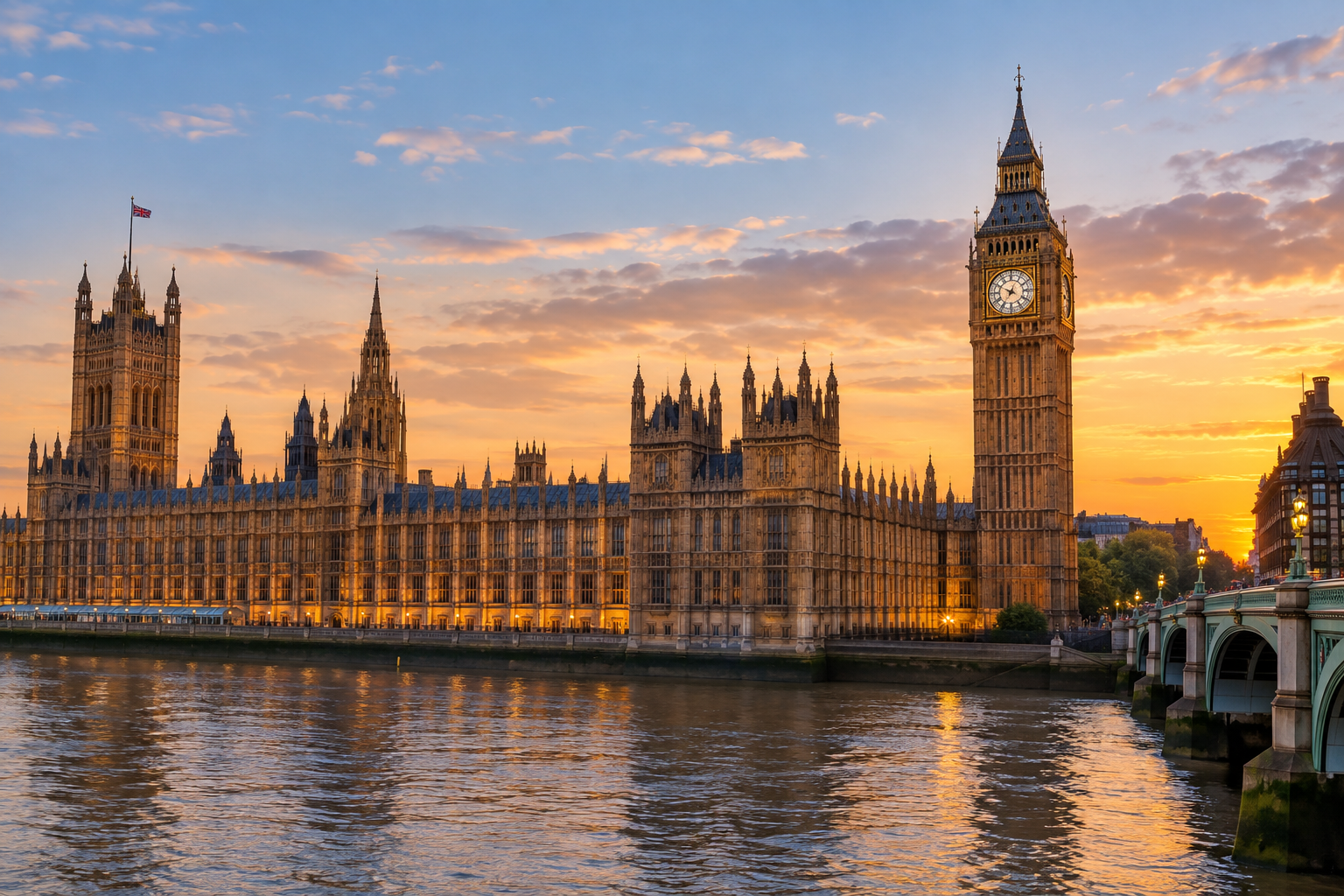
  • Big Ben and the Houses of Parliament beside the River Thames in Westminster
    • First visit
    • Sightseeing

    Westminster & South Bank

    The London most people picture: Big Ben, Westminster Abbey and the London Eye, with the riverside South Bank across the bridge. Ideal if you want to walk to the major sights.

    Getting around: Westminster and Waterloo stations, on the Jubilee line.

    See Westminster hotels →
  • Covent Garden market building and piazza in London's West End
    • Theatre
    • Food & nightlife

    Covent Garden & Soho

    The heart of the West End, surrounded by theatres, restaurants and shops. Lively late into the evening, so better for a city buzz than a quiet night's sleep.

    Getting around: Covent Garden and Leicester Square, on the Piccadilly line with a direct Tube to Heathrow.

    See Covent Garden hotels →
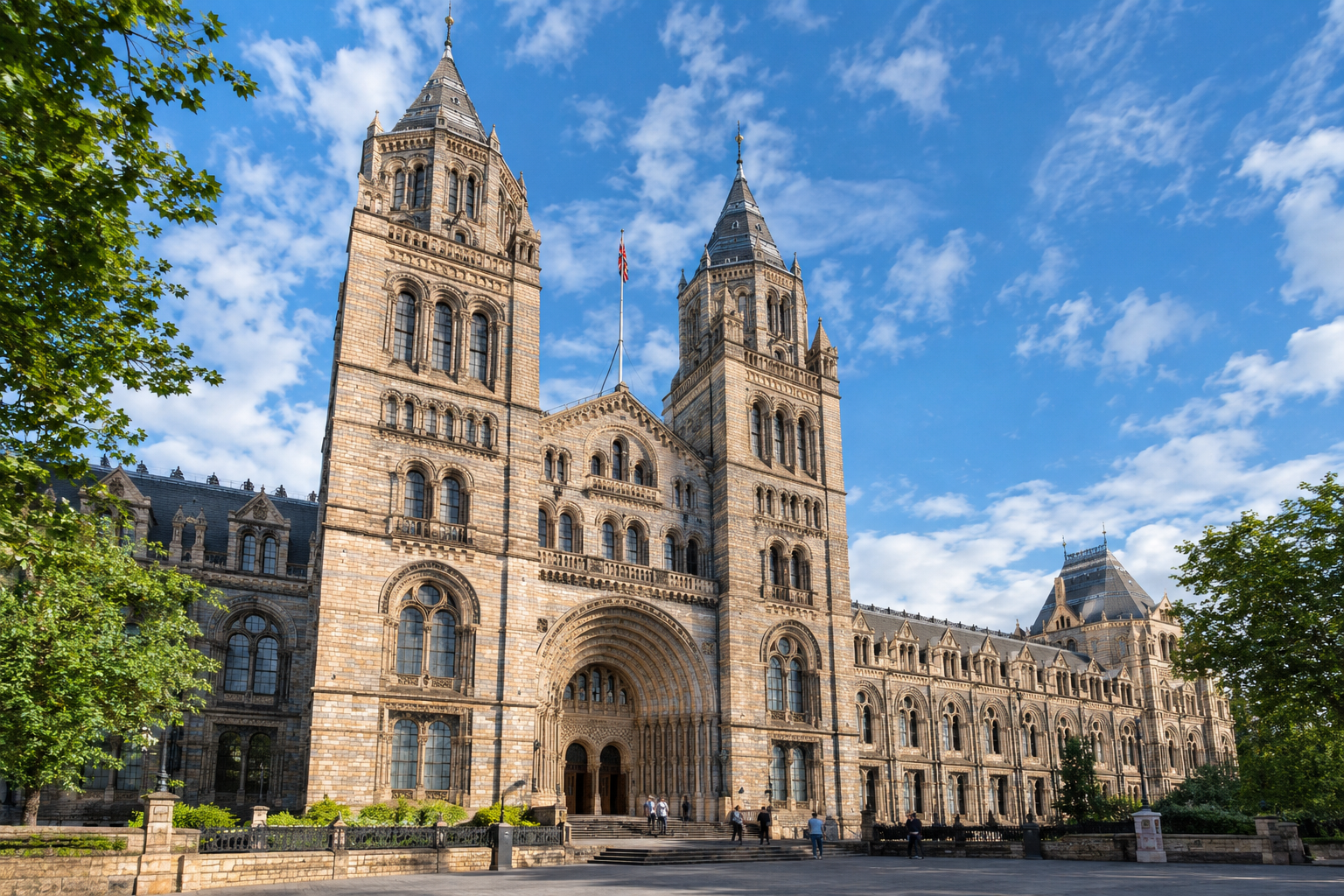
  • Natural History Museum building in South Kensington, London
    • Museums
    • Families

    South Kensington

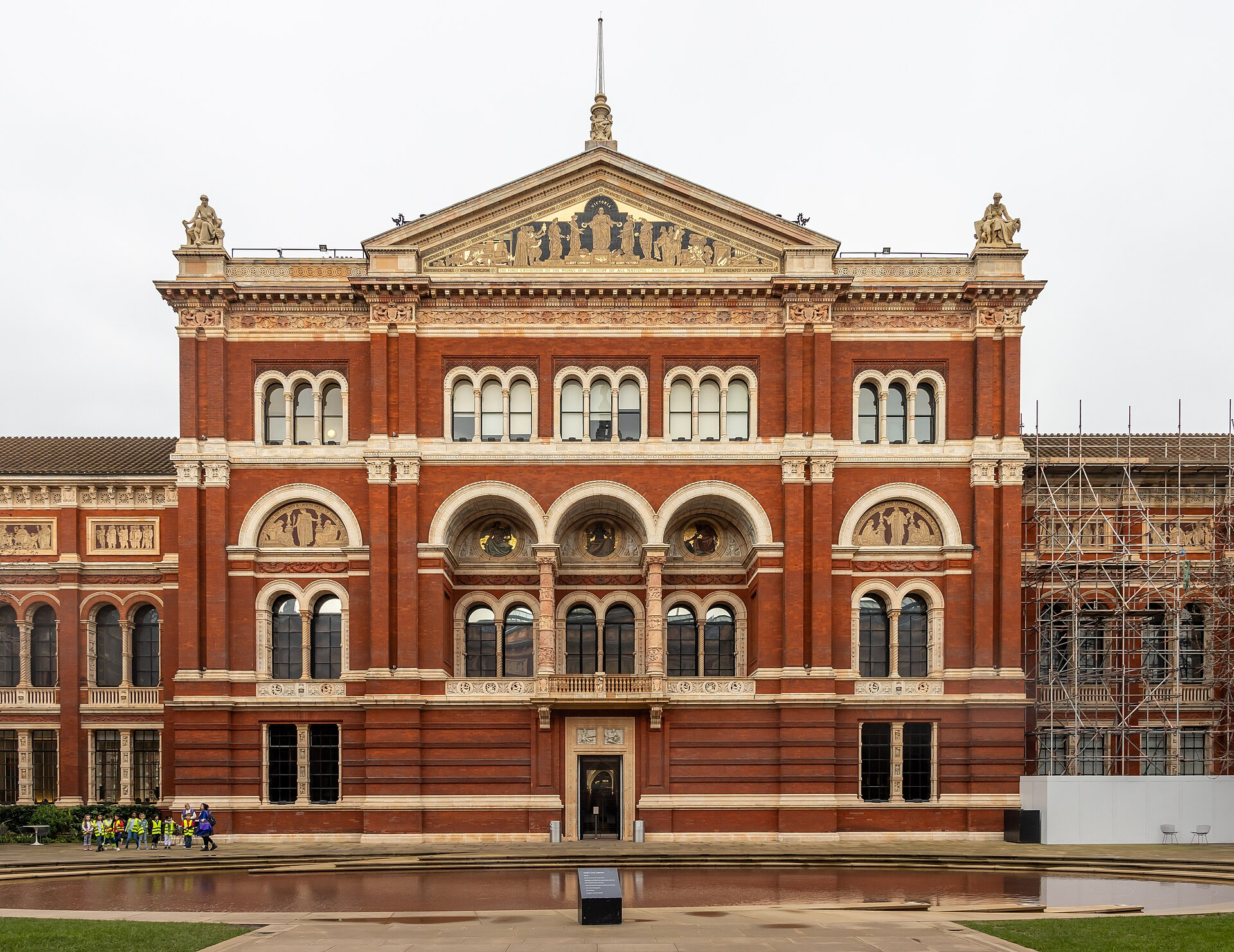
    Home to the Natural History Museum, the Science Museum and the V&A, next to Hyde Park. Calmer streets and an easy base for families.

    Getting around: South Kensington and Gloucester Road, on the Piccadilly line direct to Heathrow.

    See Kensington hotels →
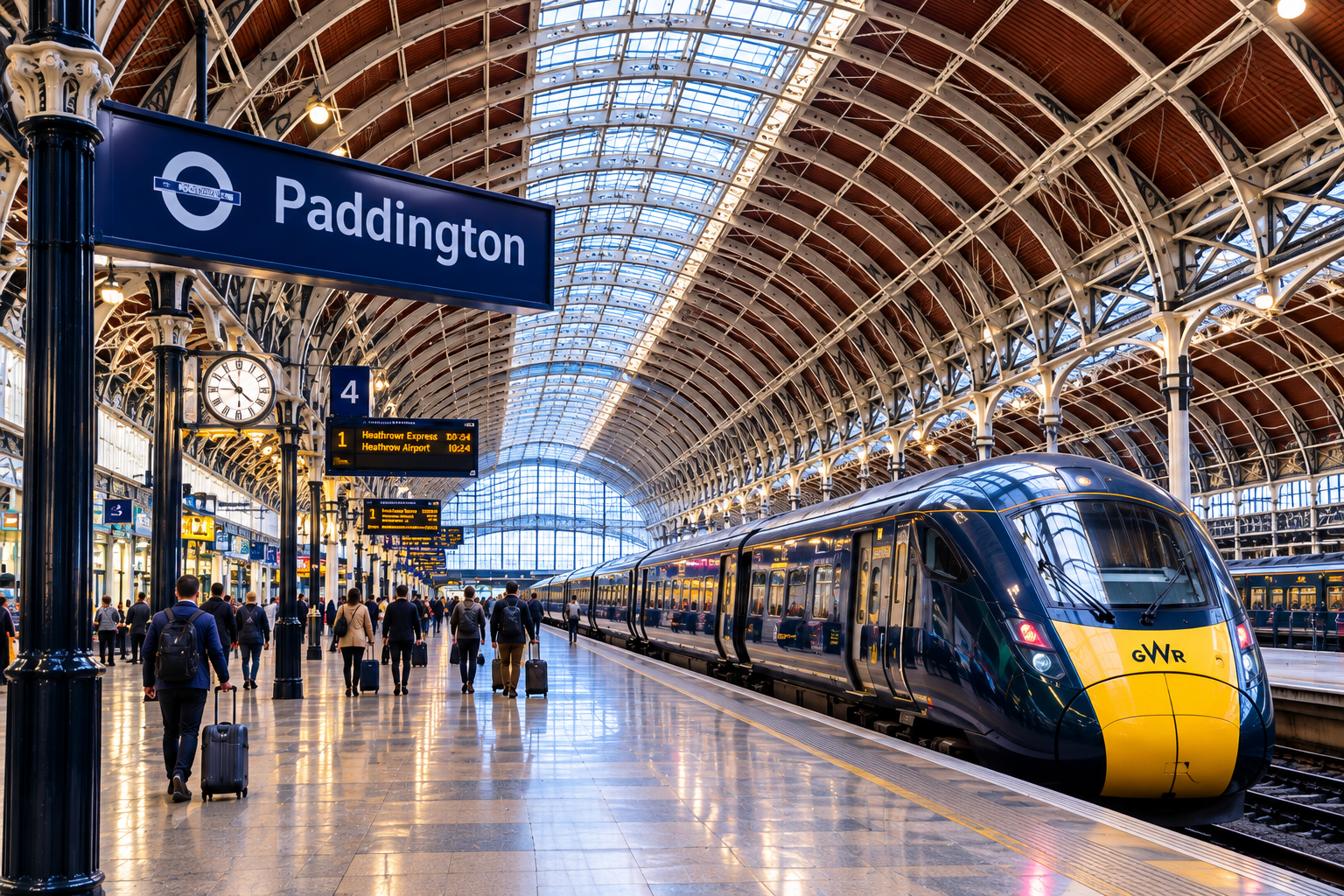
  • Paddington railway station in London
    • Heathrow arrivals
    • Short stays

    Paddington

    A practical base if you land at Heathrow, with Hyde Park a short walk away. Handy for early departures and one- or two-night stopovers.

    Getting around: Paddington station: Heathrow Express, the Elizabeth line and several Tube lines.

    See Paddington hotels →
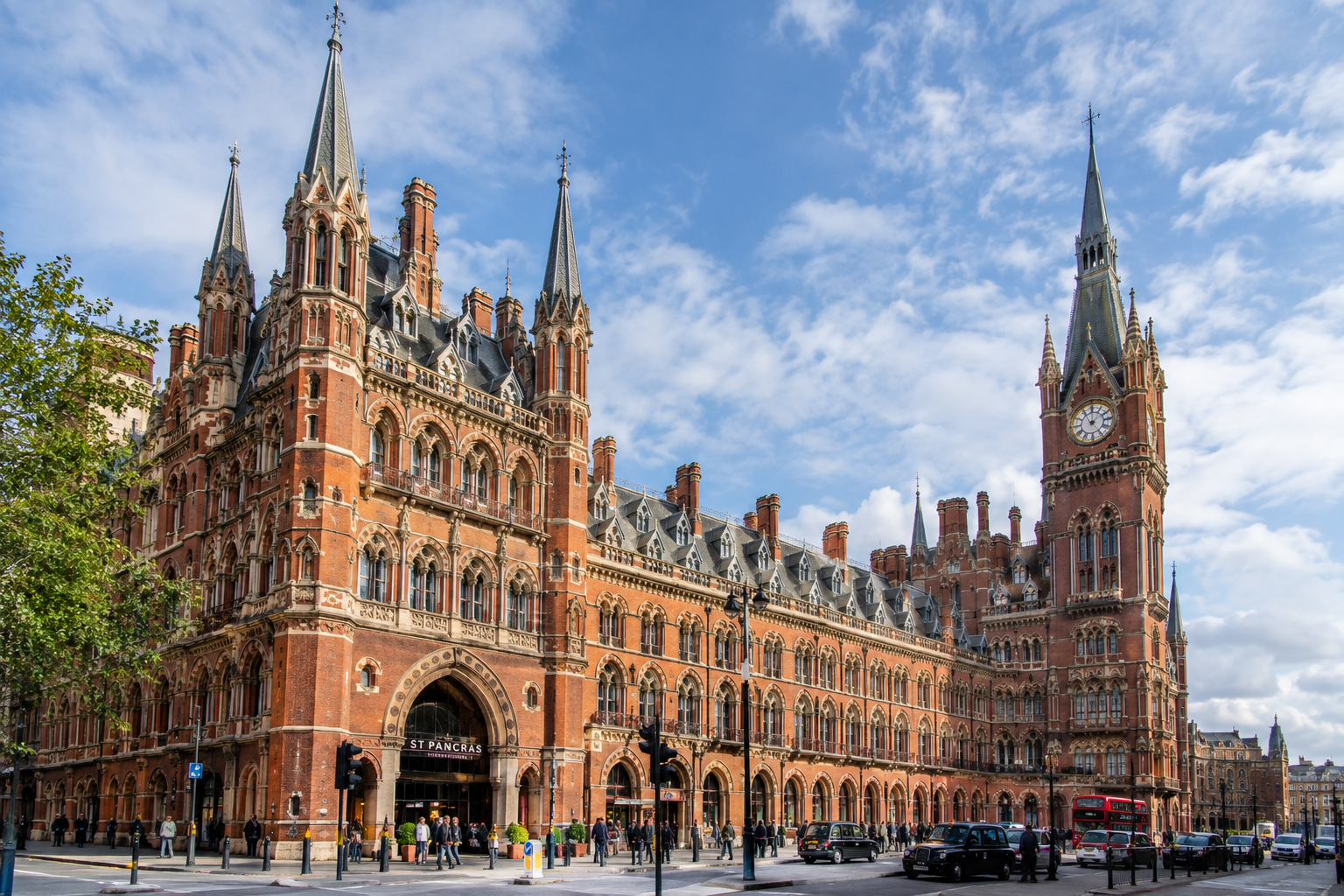
  • St Pancras International station facade at King's Cross, London
    • Rail travellers
    • Transport hub

    King's Cross & St Pancras

    One of London's best-connected areas, with the British Library and Granary Square nearby. A strong choice if you arrive by Eurostar or plan day trips by train.

    Getting around: St Pancras International (Eurostar), Thameslink trains to Gatwick and Luton, and six Tube lines.

    See King's Cross hotels →
  • Street art on a building wall in Shoreditch, East London
    • Street art
    • Markets

    Shoreditch

    East London's creative district, known for street art, independent shops, Brick Lane and a busy bar scene. Suits travellers who prefer a local feel over classic landmarks.

    Getting around: Close to Liverpool Street (Stansted Express, Elizabeth line) and Shoreditch High Street (Overground).

    See Shoreditch hotels →
Stay near your airport's rail link. The right area can cut your transfer time on both ends of the trip:

  • Heathrow: Paddington or South Kensington
  • Gatwick: Victoria (Gatwick Express) or King's Cross & St Pancras (Thameslink)
  • Luton: King's Cross & St Pancras (Thameslink)
  • Stansted: Shoreditch or the City, near Liverpool Street

Compare the cost of each route in getting from the airport.

Before You Book a London Hotel

Hotel rooms in central London are often smaller than in many other cities, so check the room size if space matters to you. Look at the distance to the nearest Tube or Elizabeth line station rather than to a specific sight, and read the cancellation terms before you pay, as the cheapest rates are often non-refundable.


Hotel links go to Booking.com, our hotel partner. If you book, we may earn a commission at no extra cost to you. How this works

Getting From the Airport to Central London

The trip from the airport is the cost most visitors forget to budget for. From Heathrow alone, the same journey into London can cost under £6 or over £100, depending on how you travel. Here's what each option really costs, how long it takes, and when a pre-booked transfer is worth it.

Heathrow to Central London: Every Option Compared

Adult single fares. Fares checked September 2026.

OptionFareTimeArrives atBest for
Piccadilly line (Tube)£5.90contactless or Oyster, to Zone 1Official fare50–60 minSouth Kensington, Piccadilly Circus, Covent Garden, King's CrossLowest cost, light luggage
Elizabeth line£15.50flat fare to Zone 1 at all timesOfficial fareAbout 30 min to PaddingtonPaddington, Bond Street, Tottenham Court Road, Liverpool StreetMost visitors: fast, direct across the centre
Heathrow Express£26on the day; from £10 booked well in advanceOfficial fare15 minPaddington onlySpeed, if you're staying near Paddington
Black cab£75–£110metered, varies with traffic and destinationEstimateDepends on trafficYour doorNo booking needed
Pre-booked private transferFixed quoteprice agreed when you bookLive quoteDepends on trafficYour doorFamilies, groups, late arrivals, heavy luggage

Pay with contactless, not paper tickets. Tap the same card or phone in and out on the Piccadilly line and the Elizabeth line, and those journeys count towards London's daily fare cap. Heathrow Express tickets don't count towards the cap.

When a Private Transfer Is Worth It

For a solo traveller, the train almost always wins on price. The picture changes when you travel as a group, arrive late, or carry a lot of luggage.

  • Three or more people: one car can cost less than several train fares.
  • Late-night arrival: fewer trains run late, and you skip a night-time change with bags.
  • Children or lots of luggage: door to door with no stairs or crowded carriages.
  • Hotel far from a station: the "cheap" train can mean a taxi at the other end anyway.

Four adults on the Elizabeth line:

4 × £15.50 = £62

If a fixed transfer quote for your group is under £62, the car is the cheaper option, and it takes you to the door.

Get a fixed Heathrow transfer quote →

Quotes from Kiwitaxi. The price is fixed when you book; check the waiting-time and flight-delay terms on your booking.

Gatwick, Stansted, Luton and London City

Fares on the other airport trains vary more with how early you book, so check the operator's site for your date. What matters most is which London station each one reaches, and the few rules that catch visitors out.

  • Gatwick LGW

    Fastest
    Gatwick Express to Victoria, about 30 min
    Cheaper
    Thameslink and Southern trains, a little slower

    Contactless works on all Gatwick trains to London. Thameslink runs through St Pancras, London Bridge and Farringdon.

  • Stansted STN

    Fastest
    Stansted Express to Liverpool Street, about 50 min
    Cheaper
    Advance Stansted Express tickets, or the coach

    Booking weeks ahead cuts the train fare a lot. Contactless is accepted to Stansted; Oyster is not.

  • Luton LTN

    Route
    DART shuttle to Luton Airport Parkway, then a train to St Pancras
    Time
    About 35 min in total

    Buy your rail ticket to "Luton Airport", not "Luton Airport Parkway", so the DART fare is included.

  • London City LCY

    Route
    DLR from the terminal into the City and Canary Wharf
    Pay
    Contactless or Oyster, part of the TfL network

    The closest airport to central London, and the easiest if you're staying in the City or Canary Wharf.

Arriving somewhere else? See our guide to booking airport transfers for other cities and airports.

Transfer links go to Kiwitaxi, our transfer partner. If you book, we may earn a commission at no extra cost to you. How this works

Getting Around London

London's public transport is simpler and cheaper than most visitors expect. You don't need to buy a pass: tap a contactless bank card or phone on the yellow reader, and London's daily cap stops charging you once you've spent a set amount. Here's what you'll actually pay, and the few rules that make the cap work for you.

  • Most you'll pay in a day £8.90 Daily cap for Zones 1–2, covering Tube, Elizabeth line, DLR, Overground and buses.
  • Any bus journey £1.75 Flat fare, with free bus changes within one hour (the Hopper fare).
  • Tube journey in Zone 1 £3.10 Peak single with contactless or Oyster; £3.00 off-peak.

London Transport Fares in 2026

Adult pay-as-you-go fares from Transport for London (TfL). Checked September 2026.

Ticket or farePriceWhat it covers
Tube single, Zone 1£3.10 peak · £3.00 off-peakOne journey within central London
Tube single, Zones 1–2£3.60 peak · £3.10 off-peakJourneys between the centre and inner areas such as Camden or Hammersmith
Daily cap, Zones 1–2£8.90Unlimited travel for the rest of the day once reached, peak or off-peak
Weekly cap, Zones 1–2£44.70Monday to Sunday, applied automatically on contactless
Daily cap, Zones 1–6£16.30Days that include Heathrow or other outer zones
Bus or tram£1.75 · cap £5.25/dayAny journey; unlimited changes within one hour
Paper single ticket£7.00Avoid: more than double the contactless fare
Paper Day Travelcard, Zones 1–2£16.60Avoid: costs more than the £8.90 contactless cap

A typical sightseeing day in Zone 1, with four Tube rides at peak time:

4 × £3.10 = £12.40 → you pay £8.90

The cap kicks in automatically, so your third or fourth ride of the day is effectively free.

How the Daily Cap Works

  • Use the same card or phone all day. The cap only counts journeys made with one card or device. Switching between your phone and your physical card splits your spending and you can end up paying more.
  • Tap in and out on trains, only in on buses. Forgetting to tap out at a station can charge you a maximum fare.
  • One card per person. Each traveller in your group needs their own contactless card, phone or Oyster.
  • Keep other cards away from the reader. Hold only one card to the reader so the system doesn't charge the wrong one.
  • Buses count towards the cap. If you take a train that day, your bus fares go towards the same daily cap instead of being added on top.
  • The weekly cap runs Monday to Sunday, not from the day you arrive.

Arriving at Heathrow? Your Elizabeth line fare into London counts towards the Zones 1–6 daily cap of £16.30. Keep using the same card for the rest of that day and your onward journeys cost very little extra. See getting from the airport for all options.

Contactless, Oyster or Travelcard?

  • Best for most visitors

    Contactless card or phone

    Nothing to buy, same fares and caps as Oyster. Check whether your bank charges a foreign transaction fee on each payment.

  • Good alternative

    Oyster card

    Useful if your card isn't contactless or your bank charges high fees. Same fares and daily caps as contactless.

  • Usually not worth it

    Paper tickets and Travelcards

    Paper singles and day Travelcards cost more than paying as you go with the daily cap.

Walk More Than You Think

Many central sights are closer together than the Tube map suggests. Covent Garden to Leicester Square, or Westminster to the South Bank, are short walks, often quicker than going underground. Children under 11 travel free with a paying adult, and buses are a cheap way to see the city from the top deck.

Source: Transport for London adult pay-as-you-go fares and caps, 2026. Fares change, usually each March; check tfl.gov.uk/fares before you travel.

Things to Do in London: Free Sights and Ticket Prices

London is one of the best cities in the world for free culture: its major national museums cost nothing to enter. The big paid landmarks are where your attractions budget goes, so it pays to know the prices before you arrive and book the busiest ones ahead.

London's Best Free Attractions

General admission to these is free. Some special exhibitions inside the museums are paid.

Prefer a guide? Browse paid museum tours in London on GetYourGuide ↗

Top Paid Attractions and Ticket Prices

Adult tickets. Prices checked September 2026.

AttractionAdult ticketGood to knowBook
Tower of London£38OfficialCrown Jewels and Yeoman Warder tours included. Timed slots can sell out in school holidays.Tickets →
Westminster Abbey£31Standard adultClosed to sightseeing visitors on Sundays. Multimedia guide included.Tickets →
St Paul's Cathedralfrom £26Standard adultIncludes the crypt and the dome galleries.Tickets →
London EyeVariesDate & timePrice depends on the day and time slot; booking online ahead is usually cheaper.Tickets →

Three classic landmarks for one adult:

£38 + £31 + £26 = £95

Mix these with the free museums above and a full week of sightseeing can cost less than many visitors expect.

Is a London sightseeing pass worth it? Only if you'll visit several paid attractions in a short time. Add up the ticket prices of the places you'll actually visit, then compare that total with the pass price. For most first-time visitors who mix free museums with two or three paid landmarks, single tickets work out cheaper.

Ticket and tour links go to GetYourGuide, our attractions partner. Prices on GetYourGuide may differ from the official rates shown above. If you book, we may earn a commission at no extra cost to you. How this works

Staying Connected in London: eSIM, Roaming or Local SIM?

You'll use mobile data in London more than you expect: maps between Tube stations, contactless payments on your phone, restaurant bookings and ride apps. The main choice is between your home roaming plan, a travel eSIM set up before you fly, or a UK SIM bought on arrival. Here's how they compare and how much data you actually need.

Your Options for Mobile Data in the UK

OptionHow it worksWatch out for
Travel eSIM
Best for most visitors
Buy a prepaid UK data plan online and install it on your phone before you fly. It works as soon as you land, and your home SIM stays in the phone.Your phone must be unlocked and eSIM-compatible. Most plans are data only, with no UK phone number.
Home roaming
Check your plan first
Keep using your usual number and plan. Nothing to set up.Daily roaming fees add up over a week. Since Brexit, many EU mobile plans no longer include the UK free of charge.
UK SIM card
Good for long stays
Buy a physical SIM from a UK network after you arrive and swap it into your phone.You have to find a shop on arrival, and swapping SIMs means losing access to your home number while it's out.
Wi-Fi only
Limited
Free Wi-Fi in hotels, cafés, museums and many Tube stations.No maps or messages between Wi-Fi spots, which is exactly when you need them.

How Much Data Do You Need in London?

For maps, messaging, social media and occasional browsing, most visitors use far less data than they fear. Video streaming and video calls are what use the most.

  • Weekend or 3–4 days 3–5 GB Maps, messaging and some social media.
  • One week 5–10 GB Everyday use, plus photo uploads and a few video calls.
  • Heavy use or longer trips 20 GB+ Streaming, frequent video calls or sharing a hotspot.

These are our estimates for typical use, not provider figures. If you're unsure, pick the plan above what you think you need, as running out mid-trip costs more.

How to Set Up a Travel eSIM

  1. Check your phone. Make sure it supports eSIM and is unlocked. On most phones you'll find this under mobile or cellular settings.
  2. Buy and install before you leave. Install the eSIM at home on Wi-Fi. It's much easier than doing it at the airport.
  3. Switch it on when you land. Turn on the eSIM line and enable data roaming for it, then set it as your mobile data line.
  4. Keep your home SIM for calls and texts. Leave it switched on for SMS codes from your bank, but turn off its data roaming to avoid charges.

Good to know on the Tube: mobile signal is available in a growing number of Underground stations and tunnels, and many stations have free Wi-Fi. You can still download an offline map of London before your trip for the sections without signal.

Travelling to other countries too? See our travel eSIM guide for regional and global plans.

eSIM links go to our eSIM partner. If you buy a plan, we may earn a commission at no extra cost to you. How this works

Do You Need Travel Insurance for London?

The UK doesn't require tourists to hold travel insurance, but most visitors should have it. The NHS is free for people who live in the UK, not for visitors. Emergency treatment in A&E is free for everyone, but if you're admitted to hospital, the bill can be large.

What the NHS Covers for Visitors

Free for all visitors

  • Emergency treatment in A&E (Accident & Emergency)
  • Emergency ambulance
  • Treatment for certain infectious diseases

Charged to most visitors

  • Hospital treatment after A&E, including admission and surgery
  • Follow-up care and most planned treatment
  • Charged at 150% of the standard NHS rate

Visiting from the EU, EEA or Switzerland? A valid EHIC lets you get medically necessary treatment during your visit on the same basis as UK residents. NHS hospitals point out that an EHIC does not cover everything and is not a substitute for travel insurance: it won't pay for a flight home, lost luggage or a cancelled trip.

Pay first, claim later. NHS hospitals usually ask insured overseas patients to pay for treatment and claim the money back from their insurer, unless the insurer confirms payment directly. Keep your policy number and the insurer's emergency line on your phone.

What Your Policy Should Cover for a London Trip

  • Medical treatment

    Hospital care, and bringing you home if you can't fly normally. This is the most important part.

  • Cancellation and delays

    Money back for prepaid flights and hotels if you have to cancel, and help with long delays.

  • Lost or delayed luggage

    Essentials while you wait for a delayed bag, and compensation if it's lost.

  • Phone and valuables

    Phone theft is a known risk in busy tourist areas. Check the limit per item, not just the total.

  • Personal liability

    Cover if you accidentally injure someone or damage their property.

  • Pre-existing conditions

    Declare any medical conditions. Undeclared conditions are a common reason for rejected claims.

Before You Buy

  • Check what you already have. Some bank cards and employers include travel insurance. Read the limits before paying twice.
  • Look at the excess. That's the amount you pay yourself on each claim. A cheap policy often has a high excess.
  • Buy it when you book, not just before you fly. Cancellation cover only protects you from the date you buy the policy.
  • Read the exclusions. Especially for sports, alcohol-related incidents and unattended belongings.

Get a travel insurance quote for your London trip

We work with EKTA for travel insurance. Compare its cover and excess with any policy you already have before you buy.

Check EKTA cover and price →

Want the details? Read our guide to travel insurance: what policies cover and exclude.

Sources: NHS overseas visitor charging guidance (NHS trusts' overseas visitor pages). NHS charging rules can change; check the latest before you travel. This is general information, not insurance or medical advice.

Insurance links go to EKTA, our insurance partner. If you buy a policy, we may earn a commission at no extra cost to you. How this works

Luggage Storage in London

Hotel checkout is usually in the morning; many flights and trains leave in the evening. Instead of dragging a suitcase around the city, you can leave it for the day. The price depends heavily on where you store it: the counter inside a big station can cost several times more than a shop or hotel around the corner.

Where to Leave Your Bags, and What It Costs

Price per bag. Checked September 2026.

OptionPriceProsCons
Your hotelOften freefor guests, on arrival or checkout dayNothing to book; ask at receptionOnly works if you're returning to the hotel area
Storage in local shops and hotels (booked by app)£3.90–£5per day in central London, plus a booking fee of about £2Typical rangeCheapest; hundreds of locations near stations and sightsOpening hours follow the shop; book ahead
Left-luggage counter inside a stationAbout £15for up to 24 hours; shorter stays cost lessEstimateStaffed desk right in the station; takes large itemsThe most expensive option

Two suitcases at a station counter for the day:

2 × £15 = £30

Two suitcases at a nearby storage point:

2 × (£5 + £1.99) ≈ £14

Store Your Bags Near the Station You Leave From

The easiest plan is to leave your bags near the station you'll depart from, so you only carry them once.

Before You Drop Your Bags

  • Check the closing time. Shop-based storage closes when the shop does. Make sure you can collect your bags before your train or flight.
  • Keep passports, medicines and electronics with you. Store clothes, not valuables.
  • Check the protection limit. Bookings usually include cover for loss or damage, but the limit varies. Look at it before you book.
  • Ask your hotel first. If you're coming back to the same area before leaving, the hotel's luggage room may cost nothing.

Arriving early? The same applies on day one. If your room isn't ready, most hotels will hold your bags until check-in, so you can start exploring straight away.

Storage links go to Radical Storage, our luggage storage partner. Prices vary by location and are shown before you book. If you book, we may earn a commission at no extra cost to you. How this works

Do You Need a Car in London?

For a city break in central London, almost certainly not. Public transport is fast and capped, parking is scarce and expensive, and driving into the centre carries daily charges. A hire car does make sense for day trips into the English countryside, or if you're continuing your trip around the UK.

Skip the car if you're…

  • Staying in central London for a few days
  • Visiting the main sights, museums and shops
  • Travelling to Oxford, Cambridge, Bath or Brighton, which are all easy by train

A car makes sense if you're…

  • Exploring the Cotswolds villages or the countryside
  • Visiting Stonehenge and Salisbury at your own pace
  • Touring the UK after London, or travelling with young children and lots of luggage

London Driving Charges in 2026

Transport for London daily charges. Checked September 2026.

  • Congestion Charge Official

    £18 a day

    For driving in central London: Monday to Friday 7am–6pm, and weekends and bank holidays 12pm–6pm.

    Rises to £21 if you pay after the day you drive. Electric cars now pay too, at a discounted £13.50 with TfL Auto Pay.

  • Ultra Low Emission Zone (ULEZ) Official

    £12.50 a day

    Only for cars that don't meet the emissions standard. Covers all of Greater London, 24 hours a day.

    Most modern hire cars meet the standard, and electric cars are exempt. Confirm with your rental company.

One weekday in central London in an older petrol or diesel car:

£18 + £12.50 = £30.50 a day, before parking

Compare that with the £8.90 daily cap on the Tube and buses in getting around London.

Pick the car up on the day you leave London. Collect it at Heathrow, or at an outer London location, when you head off for your day trip or road trip. You avoid paying for a car that sits in a car park while you explore the city on the Tube.

Before You Hire a Car in the UK

  • You drive on the left. Most hire cars are manual; if you only drive automatic, filter for it when you book.
  • Charges are your responsibility. Congestion Charge and ULEZ are paid online by the driver. If they go unpaid, the rental company can pass the penalty on to you, often with an admin fee.
  • Check the deposit and insurance excess. These vary a lot between rental companies and affect the real cost more than the daily rate.
  • Check the driver rules. Minimum age, young-driver fees and whether your licence is accepted differ by company.

Compare car hire for your trip

Search rental companies at Heathrow and across London in one place, and filter by automatic, deposit and fuel policy.

Source: Transport for London Congestion Charge and ULEZ rates, 2026. Charges and hours can change; check tfl.gov.uk before you drive.

Car hire links go to EconomyBookings, our car rental partner. If you book, we may earn a commission at no extra cost to you. How this works

💡 London Trip FAQ

Quick answers on costs, getting around and what to book before you go.

It depends mostly on your hotel. Beyond that, public transport is capped at £8.90 a day in Zones 1–2, the major national museums are free, and the big paid landmarks cost roughly £26–£38 each for an adult. See the hotel areas and attraction prices to build your own budget.

The Piccadilly line (Tube) at £5.90 with contactless or Oyster, taking 50–60 minutes. The Elizabeth line costs a flat £15.50 and takes about 30 minutes to Paddington, while the Heathrow Express is £26 on the day. For groups of three or four, a pre-booked transfer can cost less than several train tickets. Compare all options.

No. A contactless bank card or phone gives you the same fares and the same daily cap as an Oyster card. Use the same card or phone all day so the cap applies. How the daily cap works.

Westminster and South Bank, or Covent Garden, put you within walking distance of the main sights. If you arrive at Heathrow, Paddington and South Kensington have direct trains or Tube to the airport. Compare six areas.

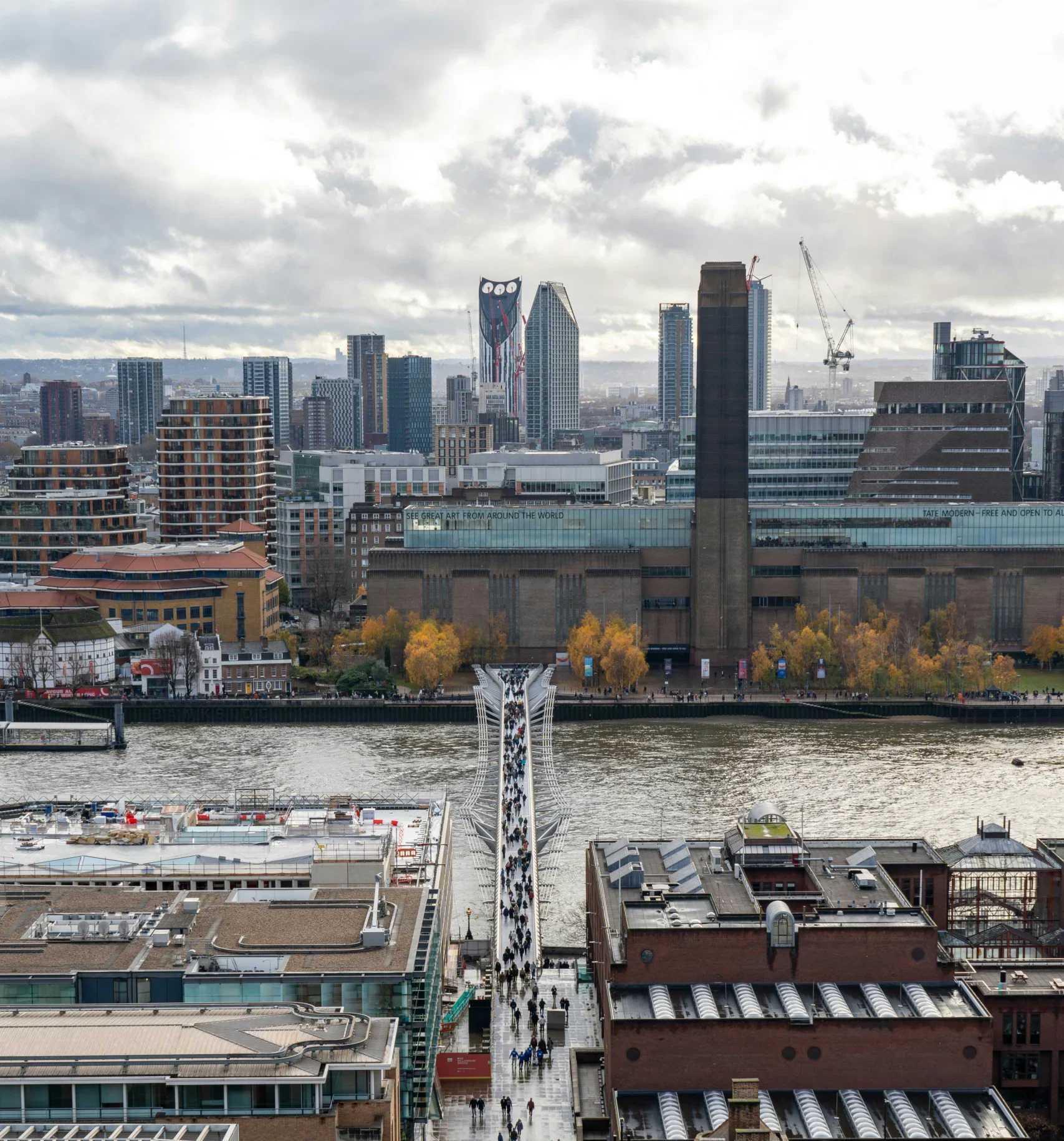
Yes, general admission is free at the major national museums, including the British Museum, the National Gallery, the Natural History Museum, the Science Museum, the V&A and Tate Modern. Some special exhibitions inside them are paid.

It isn't required, but it's strongly recommended. Emergency treatment in A&E is free for everyone, but most hospital treatment after that is charged to visitors at 150% of the standard NHS rate. What the NHS covers.

Not for central London. Driving in the centre costs £18 a day in Congestion Charge, plus £12.50 in ULEZ for older cars, before parking. A car is useful for day trips into the countryside. When a car makes sense.

For maps, messaging and social media, 5–10 GB is usually enough for a week, by our estimate. A travel eSIM installed before you fly is the simplest option for most visitors. Compare your options.

Still planning? Jump back to the airport options, the best areas to stay or the transport fares.