Saudi Arabia Travel Guide: The Best Cities, Landmarks and Hotels, Region by Region
Most people who visit Saudi Arabia for the first time arrive with one picture in their heads: sand, heat and very little else. Then they stand in front of a two-thousand-year-old Nabataean tomb in AlUla, drive down a mountain road into the fog above Abha, eat dates under a palm canopy in Al Ahsa and walk the coral-stone lanes of old Jeddah after dark, and the picture changes for good. This is a country the size of Western Europe, with eight UNESCO World Heritage sites, two of the holiest cities in Islam, mountains that stay green in August and a Red Sea coast that most of the world has never seen.
It is also a country that changes quickly. New hotels open, festivals move dates and rules for visitors are updated, so this guide sticks to what lasts: what each city is actually like, which landmarks deserve your time, where to base yourself, how long to stay and the practical things that make a trip smoother. Where a fact matters (a height, a UNESCO year, a visa rule), it is taken from an official or primary source, and those sources are listed at the end so you can check anything that might have changed before you travel.
Saudi Arabia at a glance
- Best time to visit: October to April for most of the country. June to August belongs to the highlands of Abha and Taif.
- Visa: the tourist eVisa is valid for one year, allows multiple entries and stays of up to 90 days per visit, and includes Umrah outside the Hajj season.
- First trip, one week: Riyadh and Diriyah, then fly to AlUla. Ten days: add Jeddah.
- Getting around: domestic flights between regions, the Haramain high-speed train between Jeddah, Makkah and Madinah, and a car or ride-hailing everywhere else.
- Important: Makkah is open to Muslims only, and so is the central area around the Prophet's Mosque in Madinah.
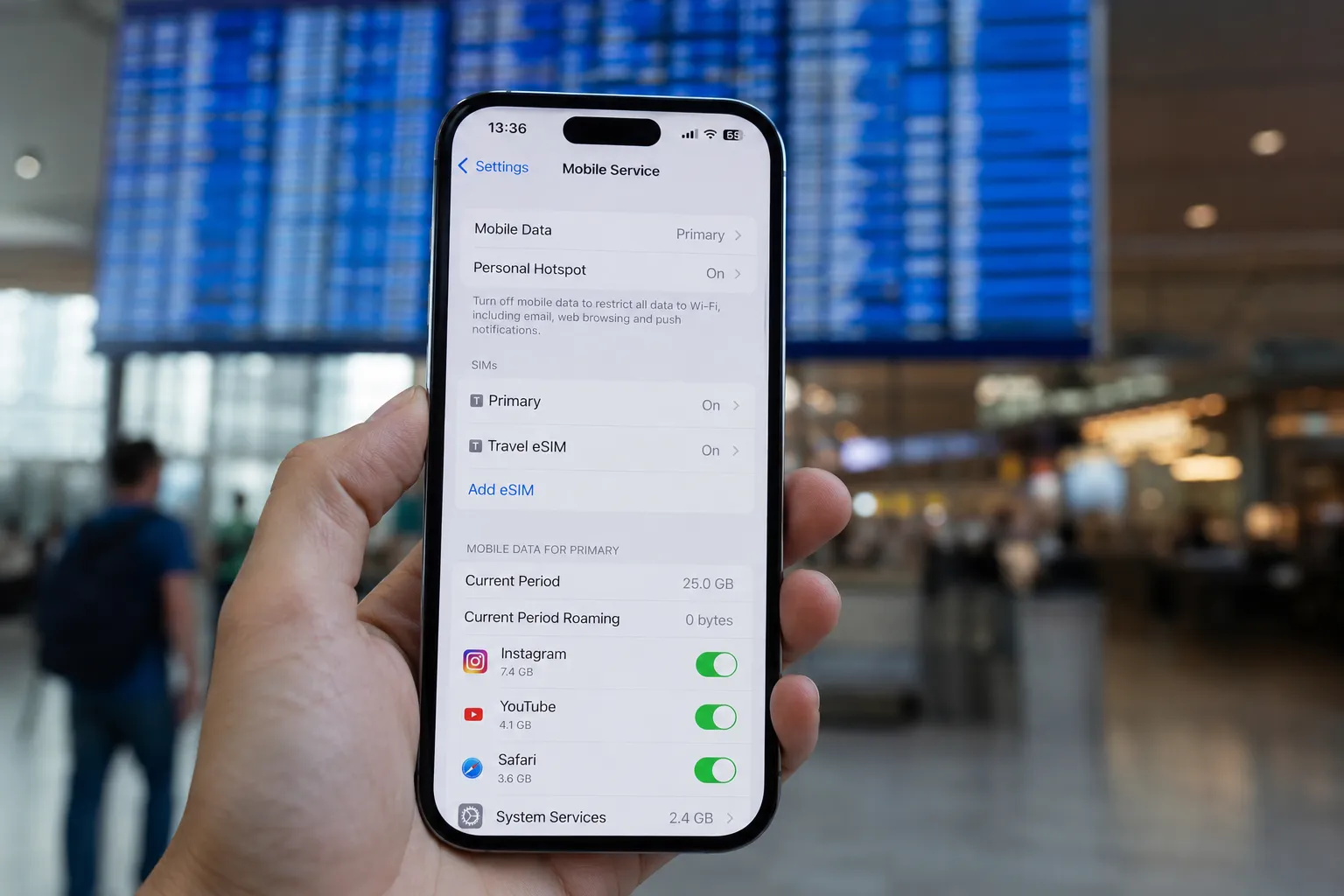
Maps, ride-hailing and ticket apps all need data from the moment you land.
Planning your trip: visa, best time to visit and getting around
Saudi Arabia only opened to leisure tourists with a dedicated tourist visa in 2019, and the practical side of a trip has caught up fast. Most of what you need to sort out before you go fits into five questions: can you get a visa online, when should you go, how will you move between cities, how will you pay and how will you stay online.
The Saudi tourist eVisa
According to the official Saudi eVisa portal, the tourist eVisa is a one-year, multiple-entry visa that lets you stay up to 90 days on each visit. It covers tourism, events, visiting family and friends, leisure and Umrah, but not Hajj, which has its own separate system. Citizens of the countries listed on the portal can apply online; if your country is not on the list, the portal tells you to contact the nearest Saudi embassy. Apply on the official portal itself rather than through a look-alike agency site, and check the requirements on the day you apply, because eligibility lists and conditions are updated from time to time.
Flying through Saudi Arabia to somewhere else? Visit Saudi also offers a transit (stopover) visa that lets passengers passing through the country enter for a short stay. If you are flying with a Saudi airline anyway, it is an easy way to add Riyadh or Jeddah to a trip. Check the current conditions on Visit Saudi before you book.
Best time to visit Saudi Arabia
For Riyadh, Jeddah, AlUla, Al Ahsa, the Eastern Province and the desert, the comfortable season runs from October to April. Days are warm to hot, nights in the desert can be properly cold in December and January, and this is when most of the big festivals and outdoor events are scheduled. From May to September, temperatures on the plains and the coast regularly climb well above 40°C, and outdoor sightseeing shrinks to early mornings and evenings.
Summer is exactly when the southwestern highlands come into their own. Taif sits about 1,800 metres above sea level, with summer averages that rarely pass 30°C, and Abha is around 2,200 metres up the Sarawat Mountains, which is why Saudi families have escaped there in summer for generations. If your only free time is July or August, plan a highlands trip rather than fighting the heat in Riyadh.
How to get around Saudi Arabia
- Domestic flights are the only sensible way to cover the big distances between regions. Riyadh to Jeddah, Jeddah to AlUla or Riyadh to Abha are all short flights, against long days on the road.
- The Haramain high-speed railway links Makkah, Jeddah (including King Abdulaziz International Airport), King Abdullah Economic City and Madinah. Saudipedia gives its top speed as 300 km/h and the Makkah to Madinah journey as about two hours.
- The Riyadh Metro was inaugurated in November 2024 and opened in phases from 1 December 2024. Saudipedia describes six lines and about 85 stations over roughly 176 km, which makes the capital far easier to explore without a car.
- Car rental is the best way to explore AlUla, Aseer, Tabuk and Hail, where sights are spread out. Distances are long and fuel stops can be far apart in the desert, so plan your route in daylight.
- Ride-hailing apps work well in the big cities and are the easiest option for short trips if you don't want to drive.
Money, cards and costs
The currency is the Saudi riyal (SAR), which has long been pegged to the US dollar at 3.75 riyals. Cards and phone payments are accepted almost everywhere in the cities, from malls to coffee kiosks, but carry some cash for small shops in old markets, village stalls and rural petrol stations. Prices for hotels vary enormously with the season: rooms in AlUla during the winter festival period and in Makkah and Madinah during Ramadan cost far more and sell out early, so book those well ahead.
Staying connected
You will use your phone constantly: for maps, ride-hailing, booking timed entry to heritage sites and, if you are Muslim, the Nusuk app for Umrah and visits to the Rawdah in Madinah. A travel eSIM is the easiest way to arrive online, and you don't need to register it in Saudi Arabia. A local visitor SIM from stc, Mobily or Zain gives more data if you are staying several weeks. We compare both, with prices, in our Saudi Arabia eSIM guide.
Saudi Arabia's UNESCO World Heritage sites
Few things show the range of the country better than its World Heritage list. Saudi Arabia has eight properties on it: seven cultural and one natural. They stretch from a Nabataean city in the northwest to an oasis in the east and a sea of dunes on the edge of the Empty Quarter. If you are building a trip around history, use this list as your backbone.
| Site | Inscribed | Type | Nearest base |
|---|---|---|---|
| Hegra Archaeological Site (al-Hijr / Mada'in Salih) | 2008 | Cultural | AlUla |
| At-Turaif District in ad-Dir'iyah | 2010 | Cultural | Riyadh |
| Historic Jeddah, the Gate to Makkah | 2014 | Cultural | Jeddah |
| Rock Art in the Hail Region | 2015 | Cultural | Hail |
| Al-Ahsa Oasis, an Evolving Cultural Landscape | 2018 | Cultural | Al Hofuf |
| Ḥimā Cultural Area | 2021 | Cultural | Najran |
| 'Uruq Bani Ma'arid | 2023 | Natural | Empty Quarter (southern Najd) |
| The Cultural Landscape of Al-Faw Archaeological Area | 2024 | Cultural | Southern Riyadh Province |
Source: UNESCO World Heritage Centre, Saudi Arabia.
The first five are easy to reach from the cities in this guide, and each gets its own section below. Ḥimā, 'Uruq Bani Ma'arid and Al-Faw are remote and best visited with a specialist guide. Al-Faw is a striking example: UNESCO describes a caravan city that grew up around the middle of the first millennium BCE, served as the capital of the Kingdom of Kinda and was abandoned in the fifth century CE when its water ran out. More than 11,000 archaeological features survive there, from Palaeolithic tools to the ruins of the city itself.
Riyadh: things to do in the capital, Diriyah and the Edge of the World
Riyadh is not a city that seduces you on the drive in from the airport. It is wide, fast and built around the car, with glass towers on one side of the motorway and endless low suburbs on the other. Give it two or three days, though, and it becomes the best introduction to modern Saudi Arabia you could ask for: a capital with excellent museums, the restored birthplace of the Saudi state on its edge, a dining scene that has exploded in the past decade and, an hour and a half's drive away, one of the most dramatic viewpoints in the Middle East.
Riyadh from above in 4K. Video: TourTheWorld / YouTube
Diriyah and the At-Turaif UNESCO site
Start where Saudi history starts. Diriyah sits on the northwestern edge of Riyadh, along the green bed of Wadi Hanifa, and its At-Turaif district was, in UNESCO's words, the first capital of the Saudi dynasty. The settlement dates back to the 1400s and is a showcase of Najdi architecture: thick adobe walls, crenellated rooftops and triangular openings that let air in and keep the sun out. Salwa Palace, the largest complex inside the walls, is the centrepiece.
At-Turaif has been carefully restored, and visits now run as timed, ticketed entries with museums and guides inside. Across the wadi, Al Bujairi is the area where most people end up for dinner, with restaurants and terraces looking back at the floodlit mud-brick walls. Go late in the afternoon, walk At-Turaif as the light turns gold and stay for dinner at Bujairi once it's dark. That is the single best evening you can spend in Riyadh.
At-Turaif: the birthplace of Saudi Arabia. Video: Amazing Places on Our Planet / YouTube
Masmak Fortress and the old centre
In the middle of the old city, the squat clay walls and watchtowers of Al Masmak are a reminder of how small Riyadh once was. The fortress dates to the reign of Imam Abdullah bin Faisal bin Turki, and it is famous as the fort that King Abdulaziz recaptured in 1902, the event that set the modern kingdom in motion. Inside is a small museum. Pair it with a wander through the surrounding traditional markets, which are at their liveliest in the evening.

The National Museum and Murabba
If you only visit one museum in Saudi Arabia, make it the National Museum in the King Abdulaziz Historical Center. Its galleries walk you from the Arabian Peninsula's prehistory, with evidence of people living in the region tens of thousands of years ago, through the ancient kingdoms and the incense trade, to the rise of Islam and the founding of the modern state. Allow at least two hours. Murabba Palace, King Abdulaziz's former residence, is in the same park.
Kingdom Centre Sky Bridge and the modern skyline
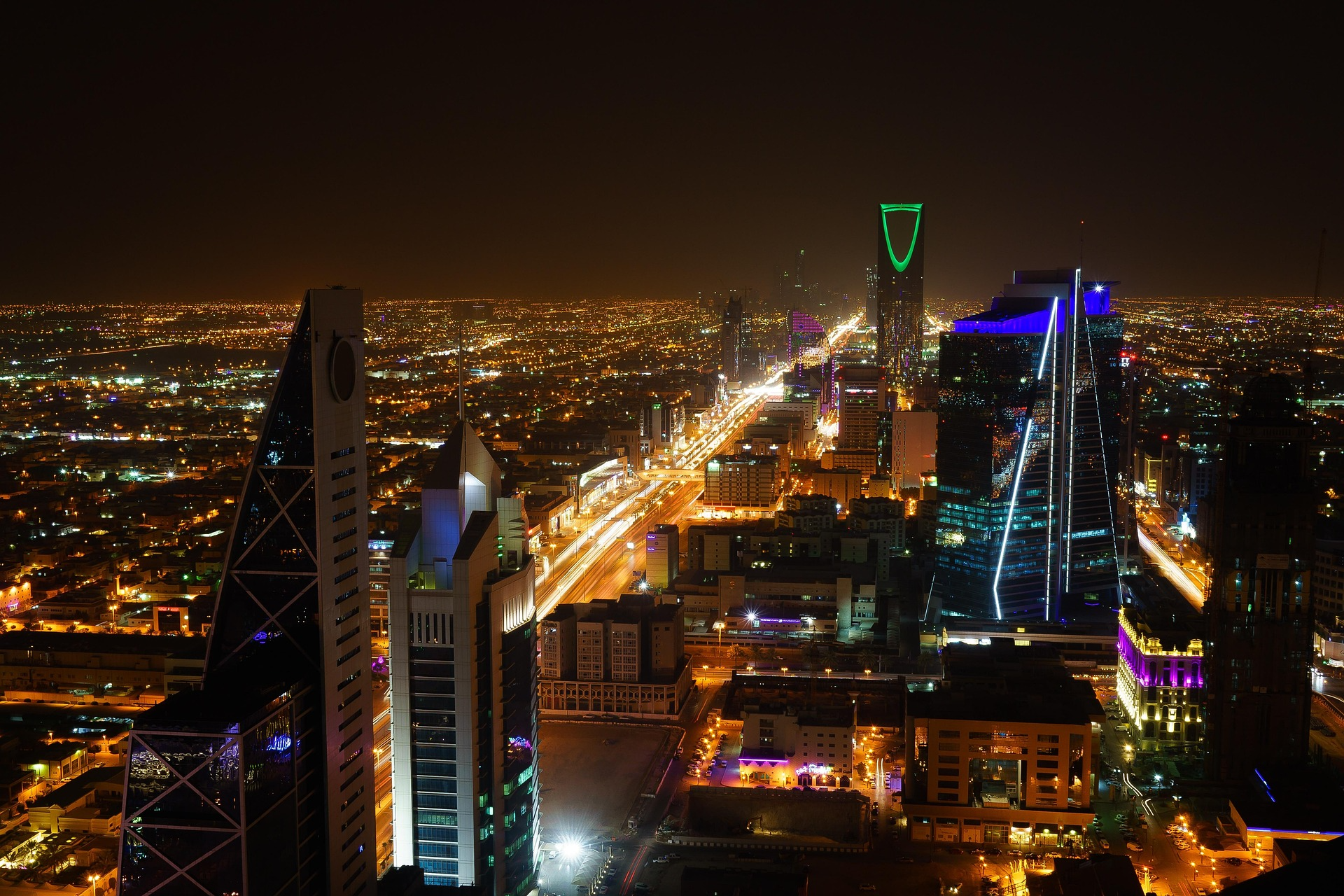
Riyadh's skyline is defined by two towers. Kingdom Centre, opened in 2002, is the one with the giant opening near the top, and its Sky Bridge spans that gap. Saudipedia gives the bridge as 65 metres long and weighing about 300 tonnes. The view at sunset, with the whole flat grid of the city lighting up below you, is worth the ticket. Al Faisaliah Tower, opened in 2000 and often described as the kingdom's first skyscraper, is 267 metres tall and topped by a 24-metre glass sphere. To see where the city is heading, walk around King Abdullah Financial District (KAFD), a cluster of new towers with LEED Platinum certification and a growing number of cafés and public art.

The Edge of the World (Jebel Fihrayn)
The Edge of the World is the reason many visitors fall for Riyadh. About 100 kilometres northwest of the city, the Tuwaiq Escarpment, a cliff line that runs for more than 800 kilometres through central Arabia, suddenly drops away to an endless plain below. Saudipedia puts the formation at 1,131 metres above the surrounding plains. Standing at the lip of the cliff as the sun sets, looking out over an ancient trade-route valley, is something you won't forget.

Getting there is half the adventure. The last stretch is rough, unpaved track, and a four-wheel-drive vehicle is usually needed. From the parking area, the walk to the main viewpoints takes about 15 to 30 minutes. Unless you are an experienced desert driver, book a tour from Riyadh: the guide knows the track, the timing and where the edges are safest. There are no railings, so keep well back from the drop, especially when it's windy.
The Edge of the World, northwest of Riyadh. Video: Amazing Places on Our Planet / YouTube
Wadi Hanifa, Boulevard and Riyadh Season
For a gentler afternoon, the parks along Wadi Hanifa, the valley that runs past Diriyah and through western Riyadh, are where families come for picnics and walks under palms and acacias. In the evenings, Riyadh's entertainment districts come alive, especially during Riyadh Season, the city's large annual festival of concerts, shows and pop-up attractions, which is usually held in the cooler months. Its dates and venues change every year, so check the official announcements before you plan around it.
Where to stay in Riyadh
The city is big, so your hotel's location matters more than in most capitals.
- Olaya and King Fahd Road: the central business strip, with the Kingdom Centre and Al Faisaliah towers, malls and the widest choice of hotels. Best for a first visit. Four Seasons Hotel Riyadh at Kingdom Centre puts you inside the tower itself.
- Diriyah: best if heritage is your priority and you want to walk to At-Turaif and Bujairi in the evening. Bab Samhan, a Luxury Collection Hotel, sits right in the historic district.
- Diplomatic Quarter and western Riyadh: quieter and greener, and home to The Ritz-Carlton, Riyadh, a palace-style hotel set in large gardens.
- KAFD and the north: modern, close to the airport road and new business hotels; handy if you have an early flight.
How many days in Riyadh? Two full days covers Diriyah, the National Museum, Masmak and the Sky Bridge. Add a third for the Edge of the World, which takes most of an afternoon and evening.
Jeddah: Al Balad, the Corniche and the Red Sea
If Riyadh is the head of the country, Jeddah is its heart. It has been a port for well over a thousand years, the city where pilgrims from across the Muslim world stepped ashore on their way to Makkah, and it still feels more relaxed, more cosmopolitan and more sea-facing than anywhere else in Saudi Arabia. Locals will tell you that Jeddah is "ghair", meaning different. They are right.

Historic Jeddah (Al Balad)
Al Balad, the old walled town, is the reason to come. UNESCO inscribed it in 2014 as "Historic Jeddah, the Gate to Makkah", noting that the city became a major port for Indian Ocean trade routes from the seventh century AD and the sea gateway for pilgrims heading to Makkah. What you see today are the tall tower houses that merchant families built in the late nineteenth century from coral stone, decorated with huge carved wooden bay windows called roshan (rawashin). The roshan aren't only decoration: they pull the sea breeze through the house and throw shade across the narrow lanes.
Old Jeddah was once enclosed by a wall built in the fifteenth and early sixteenth centuries to protect the town from Portuguese warships. It was pulled down in 1947 as the city grew, but Bab Makkah, the eastern gate that faced the road to Makkah, still stands. The district was traditionally divided into four quarters (Harat al-Sham, Harat al-Yemen, Harat al-Mazloum and Harat al-Bahr), and wandering between them is the best way to spend a few hours.
Don't miss these:
- Nassif House (Bait Nassif): built in 1872, where King Abdulaziz lived for around ten years from 1925 and received the allegiance of the people of the Hijaz. It is now a museum and cultural venue.
- Matbouli House: a four-storey family house that Saudipedia describes as more than 400 years old, restored by the family's descendants with its original furniture and woodwork.
- The souqs: spice, perfume, fabric and gold shops along the old lanes, best explored in the evening when it's cooler and busier.
Go in the late afternoon, walk until dark, then sit down for tea or a plate of mutabbaq in one of the old-town cafés. Al Balad is at its most atmospheric at night, when the lanterns come on and the roshan glow against the coral walls.
Walking through Al Balad in 4K. Video: Ubaid Hasan / YouTube
The Jeddah Corniche, King Fahd's Fountain and the floating mosque
The Corniche runs for miles along the Red Sea and is where the whole city comes to walk, picnic and watch the sunset. Two landmarks anchor it. King Fahd's Fountain, built between 1980 and 1983, shoots a jet of seawater up to 312 metres into the air, and Saudipedia describes it as the tallest fountain of its kind in the world. It is lit at night and visible from much of the waterfront.
Further north, Al-Rahma Mosque, built in 1985, sits on pillars over the water. Saudipedia calls it the first mosque in the world built on the sea's surface, which is why everyone in Jeddah knows it as the "floating mosque". At high tide, with the sea all around it, it is one of the most photographed buildings in the city.
The waterfront keeps growing. ROSHN Waterfront adds about 4.5 kilometres of promenade, with what Saudipedia calls the kingdom's longest pedestrian bridge at 650 metres, and the Jeddah Corniche Circuit, a 6.17-kilometre street track with 27 turns, hosts Formula 1 racing.
Red Sea diving and beach days
The Red Sea off Jeddah has coral reefs within easy reach of the shore. Dive centres and beach clubs north of the city run day trips for snorkellers and divers. Most private beaches charge an entry fee, and public beaches can be busy at weekends. If marine life is your main interest, ask a dive centre about current conditions and visibility before you book.
Where to stay in Jeddah
- North Corniche: sea views and easy access to the waterfront. Waldorf Astoria Jeddah – Qasr Al Sharq and Shangri-La Jeddah are the classic luxury choices here.
- Close to Al Balad: best if you want to explore the old town on foot in the evenings. Choose a hotel within a short ride rather than a long drive up the coast.
- Near the airport: only for a one-night stopover or an early Haramain train, since King Abdulaziz International Airport has its own station.
How many days in Jeddah? Two days is enough for Al Balad, the Corniche and a museum. Add a third for a boat or snorkelling trip. Muslim visitors often use Jeddah as their base for Umrah, since Makkah is a short train ride away.
AlUla: Hegra, Elephant Rock and the old town
If you only have room for one destination outside the big cities, make it AlUla. This valley in the northwest of the country, in Madinah Province, holds layer upon layer of history: the kingdoms of Dadan and Lihyan, the Nabataeans, the Islamic-era pilgrim road and a medieval mud-brick town that was lived in until the twentieth century. All of it sits among sandstone cliffs and rock formations so strange they look sculpted. It is also where Saudi Arabia has invested most heavily in tourism, so the hotels, guides and logistics are among the best in the country.
Experience AlUla. Video: Dubai Bonjour / YouTube
Hegra (Mada'in Salih)
Hegra was the first place in Saudi Arabia to be inscribed on the UNESCO World Heritage List, in 2008, and it is the main reason people fly to AlUla. UNESCO describes it as the largest conserved site of the Nabataean civilisation south of Petra in Jordan. Petra is the Nabataeans' capital; Hegra was their great southern city on the incense road. There are 111 monumental tombs here, 94 of them with decorated facades, carved into sandstone outcrops between roughly the first century BC and the first century AD. UNESCO also notes around 50 pre-Nabataean inscriptions, some cave drawings and ancient wells that are still in use.
What makes Hegra unforgettable is the setting. The tombs aren't crowded into a gorge as they are at Petra. They stand alone or in small groups across an open plain, so you see each facade against the sky with nothing else around it. The most famous, Qasr al-Farid ("the lonely castle"), was cut into a single free-standing rock and is the image you'll have seen on every poster of AlUla. Visits are organised through official tours that must be booked in advance, and the late-afternoon slots give the warmest light on the stone.

Elephant Rock (Jabal AlFil)
About 20 kilometres from AlUla, a red sandstone formation around 52 metres high has been worn by wind and erosion into the unmistakable shape of an elephant with its trunk touching the ground. By day it is a quick photo stop. After sunset, when the lounge seating around its base is lit by lanterns and fire pits, it becomes one of the best places in AlUla to sit under the stars.

AlUla Old Town
The old town was inhabited from roughly the twelfth to the twentieth century, and Saudipedia counts around 900 mud-brick houses, five courtyards and about 400 historic shops packed together for defence, with narrow, shaded alleys and fourteen gates. Parts have been restored and the main lane is lined with cafés and craft shops, while the ruined sections behind it are hauntingly quiet. Walk up to the castle on the rock above the town for the view across the oasis and palm groves.
Maraya, Dadan and Jabal Ikmah
- Maraya: a concert hall in the desert completely clad in mirrors, so it seems to dissolve into the canyon around it. Guinness World Records recognised it as the largest mirrored building in the world. It measures 9,740 square metres and seats 500. Check the event calendar; seeing a concert here is unforgettable.
- Dadan: the capital of the ancient Dadanite and Lihyanite kingdoms, where you can see the lion tombs cut into the cliff face.
- Jabal Ikmah: a canyon whose rock walls are covered with hundreds of ancient inscriptions and rock drawings, often called an open-air library.

Where to stay in AlUla
AlUla's hotels are part of the experience, and most of them are built into the landscape rather than set in a town.
- Dar Tantora The House Hotel: inside the old town itself, in restored mud-brick buildings, lit by candlelight at night. The most atmospheric address in AlUla.
- Banyan Tree AlUla: luxury tented villas tucked into a sandstone valley.
- Habitas AlUla: design-led villas in Ashar Valley, with a strong wellness focus.
- Shaden Resort: chalets and villas among the rock formations, a little more affordable than the top tier.
AlUla has its own international airport with domestic flights from Riyadh and Jeddah, but it is a spread-out destination. Rent a car or book transfers and tours. Rooms are limited and in heavy demand during the cooler months and festival periods, so book early.
How many days in AlUla? Three days is ideal: one for Hegra, one for the old town, Dadan and Jabal Ikmah, and one for Elephant Rock, a canyon hike or a hot-air balloon flight when they're running. Two days works if you're tight on time, but don't try it as a day trip.
Makkah: a guide for Muslim visitors
Makkah is the holiest city in Islam, home to the Grand Mosque (Al-Masjid al-Haram) and the Kaaba, which Muslims around the world face in prayer. Entry to Makkah is restricted to Muslims, and road checkpoints enforce this. If you are not Muslim, this section is for context only. Plan your trip around Jeddah, Taif and the rest of the country instead.

Umrah on a tourist visa
Since the tourist eVisa covers Umrah outside the Hajj season, many Muslim travellers now combine a pilgrimage with a wider trip around the country. Hajj, the annual pilgrimage, runs through a completely separate system of permits and packages, and the tourist visa can't be used for it. Permits and bookings for Umrah and for prayer in the Rawdah in Madinah are managed through the official Nusuk platform, so set up your account before you travel and check the latest requirements there.
Practical advice for Umrah
- Timing: the Grand Mosque is busiest during Ramadan, especially the last ten nights, and on weekends and school holidays. For a calmer Umrah, choose a weekday outside Ramadan and perform the tawaf late at night or after Fajr.
- Getting there: most pilgrims fly into Jeddah. The Haramain high-speed train links King Abdulaziz International Airport, Jeddah and Makkah, then continues to Madinah.
- Ihram: if you are travelling to Makkah for Umrah, enter ihram at or before your miqat. If you are flying straight in, that usually means before landing in Jeddah. Pilgrims coming from Taif pass through the miqat at Qarn al-Manazil (Wadi as-Sayl al-Kabir) or Wadi Muharram.
- Hotels: the hotels closest to the Haram, in and around the Abraj Al Bait (Clock Tower) complex, let you walk to prayer in minutes. Fairmont Makkah Clock Royal Tower and Raffles Makkah Palace are among the best known. Prices rise sharply in Ramadan; book months ahead.
Beyond the Haram
Leave time for Makkah's museums. The Exhibition of the Two Holy Mosques Architecture displays historic doors, pillars and pieces of the Kaaba's past furnishings, and the Clock Tower Museum explains the science of time and astronomy in Islam. Many visitors also climb Jabal al-Nour to the Cave of Hira, where the first revelation came to the Prophet Muhammad (peace be upon him). The climb is steep, so go early in the morning, wear proper shoes and carry water.
Madinah: the Prophet's Mosque, Quba and Uhud
Madinah has a gentler rhythm than Makkah. Pilgrims often describe it as the city where they finally slow down, and the tree-lined boulevards, the quiet of the early morning and the scale of the Prophet's Mosque under its giant umbrellas make it easy to see why. Most Muslim visitors spend three to four days here, either before or after Umrah.

Can non-Muslims visit Madinah?
The central area around the Prophet's Mosque is reserved for Muslims, but non-Muslim visitors can travel to Madinah and see other parts of the city. Follow the signs on the approach roads and check the current guidance on Visit Saudi before you go, as access rules are set by the authorities.
Al-Masjid an-Nabawi
The Prophet's Mosque, which contains the tomb of the Prophet Muhammad (peace be upon him), is the heart of the city. Visits to the Rawdah, the area between the Prophet's minbar and his tomb, need a timed permit booked through the Nusuk app. Two museums are close by: the Al-Salam Museum on the west side and the Quran Museum on the south side. According to Saudipedia, entry to the museums is free.
Quba Mosque
About 3.5 kilometres from the Prophet's Mosque, Quba Mosque is described by Saudipedia as the first mosque built in Islam, completed in 622. Many visitors go on a Saturday morning, following the Prophet's practice, and pray two rak'ahs there. The International Fair and Museum of the Prophet's Biography is a short walk away.

Mount Uhud and the Martyrs' Cemetery
The Uhud range runs for about eight kilometres along the north of the city, roughly four kilometres from the Prophet's Mosque. It is the site of the Battle of Uhud in 625 CE, and the cemetery of the martyrs of Uhud lies along its southern side. Come in the early morning, before the heat and the tour buses. Al-Qiblatayn Mosque, where the direction of prayer changed from Jerusalem to Makkah, is a natural stop on the same loop.
The Hejaz Railway Museum
Madinah was the southern end of the Ottoman-era Hejaz Railway, and its historic station now houses a museum. Saudipedia describes fourteen halls covering the history and heritage of the region from prehistory to the modern era. It is open to all visitors, and the old locomotives outside make it a good stop for families.
A 4K city tour of Madinah. Video: ST Travel / YouTube
Where to stay in Madinah
As in Makkah, the closer you sleep to the mosque, the easier the five daily prayers become. The central area is packed with hotels within a few minutes' walk of the gates. The Oberoi Madinah is the most refined, while Anwar Al Madinah Mövenpick is one of the largest and a popular choice for families. The Haramain train station is outside the centre, so take a taxi to your hotel.
Al Ahsa: the world's largest oasis
Al Ahsa is the destination Saudis recommend to each other and foreign visitors rarely hear about. Around 150 kilometres south of Dammam, in the Eastern Province, the desert suddenly gives way to a sea of palm trees. UNESCO counts some 2.5 million date palms and calls Al Ahsa the largest oasis in the world. It was inscribed in 2018 as "an evolving cultural landscape": twelve components covering 8,544 hectares of gardens, irrigation canals, springs, wells, historic buildings and archaeological sites, all shaped by people who have farmed this water for thousands of years.
Al Qarah mountain, Al Hofuf. Video: Huznuz / YouTube
Al Qarah Mountain and its caves
Al Qarah is the oasis's signature sight: a mountain of eroded rock about 15 kilometres east of Al Hofuf, rising 210 metres above sea level, threaded with twelve caves and narrow, wind-carved passages. The largest, Naga Cave, can hold around 500 people. The real surprise comes on a summer afternoon: Saudipedia notes that the temperature inside stays around 20°C even when it's well over 40°C outside. Walk the passages with a guide, then climb to the top for the view over the palm groves.
Al Hofuf: Qaisariya Souq and Ibrahim Palace
- Al Qaisariya Souq: a covered market in the heart of Al Hofuf, built in 1822, with about 422 shops selling dates, spices, traditional cloaks (bisht), incense and crafts. It is the place to buy Al Ahsa dates to take home.
- Ibrahim Palace: an Ottoman-era fortress complex of about 18,200 square metres in Al-Koot district, mixing Islamic and military architecture, with domes, a mosque and thick defensive walls.
- Jawatha Mosque: about 18 kilometres from Al Hofuf. Saudipedia dates it to 628 and says it was the second mosque, after the Prophet's Mosque, where Friday prayers were held.
Springs, palm farms and Al-Asfar Lake
More than thirty springs once fed the oasis's irrigation network, and some are still places to cool off and picnic. Ask your guide about visiting a palm farm, ideally during the date harvest, when the trees are heavy with fruit and the oasis hosts its date markets and festival. To the east, Al-Asfar Lake, a body of water around 25 kilometres long formed in the desert by rain and drainage water, attracts birds and birdwatchers in winter.
Where to stay in Al Ahsa
Base yourself in Al Hofuf. The Al Ahsa InterContinental is the best-known full-service hotel and a comfortable base for a night or two. Al Ahsa can be done as a long day trip from Dammam or Al Khobar, but you'll enjoy it far more with an overnight stay: the souq and the palm gardens are at their best in the early morning and after sunset.
Dammam, Al Khobar and Dhahran: the Eastern Province
The Eastern Province is Saudi Arabia's Gulf coast and the home of its oil industry. The three cities of Dammam, Al Khobar and Dhahran have grown into one metropolitan area. It isn't a classic sightseeing destination, but it is relaxed and family-friendly, it has one of the best cultural centres in the region, and it is the obvious base for Al Ahsa and for crossing by road to Bahrain over the King Fahd Causeway.
Ithra (King Abdulaziz Center for World Culture)
Ithra is the reason to come to Dhahran. The building, a cluster of polished stones that looks like it was rolled into place, was inaugurated in 2016. Inside are a four-storey library, a museum with five galleries, a cinema, a performing arts theatre, the Great Hall, the Idea Lab, an Energy Exhibit and a children's museum, plus an 18-storey tower. Check the programme before you go: its exhibitions and film seasons are some of the best in the Gulf.
The Khobar Corniche and Half Moon Bay
In the evenings, Khobar's Corniche fills with families, joggers and coffee carts along the Gulf. South of the city, Half Moon Bay is the classic weekend beach escape, a long curved bay with calm, shallow water and resorts along the shore.
Tarout Island and Souq al-Hub
Tarout Island, linked to the mainland by a causeway, is one of the oldest inhabited places on the Gulf coast. Tarout Castle sits on a hill in the centre of the island, and Saudipedia calls it one of the significant fortresses in the history of the Arabian Gulf. In Dammam itself, Souq al-Hub is a dense, busy market district that shows you everyday life rather than tourism.
Where to stay in the Eastern Province
Al Khobar is the most convenient base, with the Corniche, restaurants and malls on your doorstep. Kempinski Al Othman Hotel Al Khobar is one of the established upscale options. King Fahd International Airport is well outside Dammam, so allow plenty of time for the transfer to your flight.
Abha and the Aseer mountains: cool summers, cloud forests and Rijal Almaa
Abha will change your idea of Saudi Arabia. The capital of the Aseer region sits about 2,200 metres above sea level in the Sarawat Mountains, and in summer, when Riyadh is baking, its hills are green, misty and cool. Abha was named Arab Tourism Capital in 2017 for its moderate climate and varied landscape. It is a place of terraced fields, juniper forests, painted houses and roads that wind down escarpments towards the Red Sea plain.
Rijal Almaa heritage village
The single most beautiful village in Saudi Arabia, for many visitors. Rijal Almaa stands in a valley below the Aseer escarpment: a cluster of tall stone towers, several storeys high, with whitewashed window frames, once an important stop on the old trade routes through the mountains. Today the houses hold a museum and you can climb through the old rooms. The village is a winding drive down the mountain from Abha. In season, a cable car from Al Soudah descends towards it.
Rijal Almaa heritage village. Video: Doug Barnard / YouTube
Al Soudah and the cable cars
Al Soudah, the highland area northwest of Abha, is home to the country's highest peaks, and its cable car station is about 3,015 metres up, according to Saudipedia. It is the classic summer escape: forests of juniper, viewpoints over the clouds and picnic spots full of families on summer evenings. Abha has a second cable car route, which runs from the New Abha Station at the dam lake up to the Green Mountain (Mount Dhara) and on to Abu Kheyal Park. Ride it at sunset for the best view of the city.

Abha's old quarter, markets and art
Aseer's houses are famous for their painted interiors, a tradition known as Al-Qatt Al-Asiri, in which the women of the region decorate walls with bright geometric patterns. In Abha you'll see the style on cafés, gates and murals, and the city's art-filled streets are good for an evening walk. The weekly markets in the surrounding towns are the place to look for honey, coffee and handicrafts.
Where to stay in Abha
Abha Palace Hotel, overlooking the dam lake, is the long-established choice near the cable car. For something quieter, look at the lodges and chalets in Al Soudah, where you wake up above the clouds. Summer is peak season, especially during the school holidays, so book early. Abha's airport has frequent flights from Riyadh and Jeddah.
When to visit Abha: June to September for cool weather and summer festivals. Winter is quieter and can be cold at night, but it's clearer, which is ideal for hiking and photography. Pack a jacket at any time of year; fog can roll in within minutes on the escarpment.
Taif: the city of roses on the mountain road from Makkah
Taif has been the Hijaz's summer retreat for centuries. It sits around 1,800 metres above sea level on the eastern slopes of the Sarawat Mountains, and Saudipedia notes that summer averages rarely exceed 30°C, with July the hottest month at an average of about 27°C. Muslim visitors often add it to an Umrah trip, since the mountain road from Makkah takes you there in a little over an hour.
Taif roses and the rose season
Taif is the rose capital of the kingdom. Saudipedia puts the harvest at about 650 million roses a year, supplying more than seventy distilleries that produce rose water and the precious rose oil used in perfume. The harvest begins at the end of March, and the rose season festival that follows is the best time to visit the farms and watch the roses being distilled the traditional way. Buy rose water directly from a farm. It is cheaper, and the smell will fill your suitcase.
Al Hada, Al Shafa and the Al Kurr road
- Al Hada: about 20 kilometres west of the city, on the edge of the escarpment, with viewpoints, cable cars and the famous zigzag road that descends toward Makkah.
- Al Shafa: about 25 kilometres southwest, at around 2,500 metres, with cool summers, frequent fog, fruit farms and summer honey.
- The Aqabat al-Kurr road: the road linking Makkah and Taif, 87 kilometres in all, with a spectacular climb up the mountain. Drive it in daylight, and watch out for the baboons that gather at the lay-bys.
Shubra Palace and Souq Okaz
Shubra Palace, built in 1905, was King Abdulaziz's summer residence, then a government headquarters, and since 1988 a museum of antiquities and heritage. Its wooden balconies and latticework are among the finest in the Hijaz. North of the city, Souq Okaz revives one of the most famous markets of ancient Arabia, once the gathering place of tribes and poets for twenty days each year. The kingdom brought it back to life in 2007, and its annual festival now celebrates poetry, crafts and heritage.
Fog, mountains and roses: a walk around Taif, Al Hada and Al Shafa. Video: Madinah Global / YouTube
Tabuk and Wadi Al-Disah
The northwest corner of the kingdom, around Tabuk, is a land of canyons, sandstone mountains and a Red Sea coast that is now being transformed by the country's biggest development projects. For most travellers, the highlight is Wadi Al-Disah: a valley about 125 kilometres long with towering rock walls, palm trees along its floor and springs that flow all year, including Ain al-Zarqa, al-Tarif and al-Namatiyah. Driving or hiking between its cliffs, with water running beside the track in the middle of the desert, feels unreal.
Wadi Al-Disah in 4K. Video: Amazing Places on Our Planet / YouTube
Visit with a 4x4 and a local guide. The track crosses water and soft sand, mobile coverage drops out in places and the valley is remote. Tabuk city has an airport and hotels and makes a sensible base. The cooler months are the best time, and winter can bring real cold to the northern highlands, where snow occasionally falls on the mountains around Tabuk.
Hail and the rock art of Jubbah
Hail, in the north-central part of the country, is known as the cradle of Arab generosity. It is the homeland of the Tayy tribe and of Hatim al-Tai, whose name is still a byword for hospitality across the Arab world; the ruins of his palace stand in the village of Tuwarin, in the Aja Mountains. Two mountain ranges, Aja and Salma, frame the city with palm groves, springs and the Darah Crater, a favourite picnic spot after rain.
Rock Art in the Hail Region (UNESCO)
Hail's UNESCO World Heritage site, inscribed in 2015, has two parts: Jabal Umm Sinman at Jubbah, about 90 kilometres northwest of the city, and Jabal al-Manjor and Raat at Shuwaymis, about 250 kilometres to the south. The petroglyphs carved into their rocks span roughly 10,000 years. At Jubbah alone, Saudipedia counts about 5,431 Thamudic inscriptions and 1,944 drawings, 1,378 of them showing camels. Seeing them in the low evening light, when the carvings stand out from the rock, is the best way to understand how long people have lived in this desert.
In the city
Al-Qishlah Palace, built in 1941 as a military fort, has clay and mud-brick walls with eight cylindrical towers and is the city's best-known landmark. A'arif Fort, on a hill south of the centre, has the best view over Hail's farms and old neighbourhoods. Hail is a long way from the usual tourist circuit, so a local guide makes a real difference, both for finding the rock art sites and for understanding what you're looking at.
Beyond the main cities: Najran, the Empty Quarter and long road trips
Once you've seen the big names, Saudi Arabia keeps going. Three of its eight World Heritage sites lie far from the usual circuit, and they reward travellers who have time, a sense of adventure and a good guide.
Ḥimā and Najran
In the far southwest, near the city of Najran, the Ḥimā Cultural Area was added to the World Heritage List in 2021. It sits on one of the oldest caravan routes on the Arabian Peninsula, and its rock faces are covered in thousands of years of inscriptions and rock art left by travellers and armies passing the wells. Najran itself has distinctive mud-brick tower houses and a fortress overlooking palm groves. Combine it with Abha if you are in the south.
'Uruq Bani Ma'arid and the Empty Quarter
Saudi Arabia's only natural World Heritage site, inscribed in 2023, protects part of the western edge of the Rub' al Khali, the Empty Quarter: long parallel lines of towering red dunes and the gravel plains between them, home to desert wildlife that has been reintroduced into the reserve. It is extremely remote. Go only on an organised expedition with experienced desert drivers, never on your own.
Road trips: what to know before you drive
Driving in Saudi Arabia is easy on the big highways and genuinely wild beyond them. The classic road trips are the Aseer escarpment around Abha, the Taif-to-Makkah descent and the canyon country around AlUla and Tabuk. A few things make them safer:
- Fill up whenever you see a fuel station in the desert, even if your tank is half full.
- Carry more water than you think you need, plus snacks and a charged power bank.
- Watch for camels on rural roads, especially at dusk; they wander onto the tarmac without warning.
- Download offline maps for your route. Coverage is good on main roads but drops out in valleys and deep desert.
- Don't drive off-road without a 4x4, recovery gear and someone who knows the terrain.
Festivals and seasons worth planning around
Much of Saudi Arabia's events calendar is organised into "seasons": city-wide festivals with concerts, food, art and sport that run for weeks at a time. Their exact dates move every year, so treat this as a guide to which part of the year to look at, then check the official announcements.
- Riyadh Season: the capital's huge entertainment festival in the cooler months, with concerts, theme zones, boxing and theatre.
- Diriyah Season: heritage, culture, dining and sporting events centred on At-Turaif and Al Bujairi.
- Winter in AlUla: the peak season for festivals, concerts at Maraya, hot-air balloons and night events among the rocks.
- Jeddah Season: a summer programme along the waterfront and in Al Balad.
- Taif Rose Season: from the end of March, when the rose farms open their doors for the harvest and distillation.
- Summer in Aseer: the Al Soudah area becomes the country's summer playground, with outdoor events and cool mountain evenings.
Festival periods are when Saudi Arabia is at its liveliest, but they are also when hotel prices peak. If you'd rather have Hegra or At-Turaif with fewer people around, travel just before or just after the big events.
How expensive is Saudi Arabia for tourists?
Saudi Arabia is not a budget backpacking destination, but it's also not as expensive as its luxury-hotel image suggests. The biggest costs are accommodation and transport between regions; food and everyday spending can be very reasonable.
- Hotels range from international five-star brands to mid-range chains and simple apartment hotels in every city. Prices swing hugely with the season, especially in AlUla in winter and in Makkah and Madinah during Ramadan.
- Eating out covers everything from cheap shawarma, falafel and mutabbaq stands to fine dining in Riyadh and Jeddah. Eating where locals eat is both cheaper and better.
- Transport: domestic flights booked early are often good value. The Haramain train is the most comfortable way between Jeddah, Makkah and Madinah, and ride-hailing makes the cities affordable without a car.
- Sightseeing: many museums and public sites are free or inexpensive, while timed experiences such as Hegra tours, guided desert trips and festival events cost more and should be booked ahead.
The simplest way to keep costs under control is to travel just outside the peak festival weeks, book flights and AlUla accommodation early, and mix one or two special hotels with comfortable mid-range ones elsewhere.
Travelling as a woman, solo or with family
The kingdom has changed enormously for women travellers in a short time. Women have been able to drive since 2018, and visiting women can apply for the tourist eVisa themselves, check into hotels and travel around the country independently. Many first-time female visitors say they felt more at ease than they expected, in part because Saudi society is very protective of guests.
- What to wear: modest, loose clothing that covers shoulders and knees is enough in most places. You don't need an abaya, though some women like to wear one in conservative areas because it's comfortable and cool. Keep a scarf in your bag for mosques.
- Getting around: ride-hailing apps are the easiest option in the cities, and many women rent cars for road trips in AlUla or Aseer.
- Queues and seating: some offices, older restaurants and events still have separate areas or queues for families and women. Follow the signs. Staff will usually point you the right way.
For families, Saudi Arabia is an easy country with children. Hospitality is warm and genuine, kids are welcome almost everywhere, and evenings are when everyone goes out, so your children won't be the only ones eating dinner at nine. The best family picks are the parks of Wadi Hanifa and the National Museum in Riyadh, the Corniche and the floating mosque in Jeddah, Ithra's children's museum in Dhahran, the cool caves of Al Qarah and the cable cars of Abha and Taif. Plan outdoor activities for the early morning, keep the hottest hours for indoor sights, and pack sun protection whatever the season.
Saudi Arabia itineraries: 7, 10 and 14 days
Saudi Arabia is too big to see in one trip, and trying to fit everything in is the most common first-timer mistake. The routes below assume you fly between regions and travel in the cooler months. Swap in Abha and Taif if you're going in summer.
| Trip length | Route | Best for |
|---|---|---|
| 7 days | Riyadh and Diriyah (3 nights) → fly to AlUla (3 nights) → fly out via Riyadh or Jeddah | First-time visitors who want history and desert landscapes |
| 10 days | Riyadh (3) → AlUla (3) → Jeddah (3), with a day trip to Taif from Jeddah | The classic first trip: capital, ancient sites, Red Sea |
| 14 days | Riyadh (3) → Al Ahsa and Al Khobar (2) → AlUla (3) → Jeddah (3) → Abha (2) | Seeing every side of the country: oasis, Gulf, desert, coast, mountains |
| Umrah + travel, 10 days | Jeddah (2) → Makkah (3) → Madinah (3) → AlUla (2) | Muslim travellers combining pilgrimage with heritage |
| Summer escape, 7 days | Jeddah (2) → Taif (2) → Abha and Al Soudah (3) | June to September, when the lowlands are too hot |
A few rules of thumb make every one of these routes work better. Fly rather than drive between regions, because a "short" hop on the map is often a full day on the road. Do outdoor sightseeing early in the morning and late in the afternoon, and keep the middle of the day for museums, cafés and a rest. Book AlUla, timed heritage tickets and Ramadan stays in Makkah and Madinah first; everything else can be arranged closer to the date.
What to eat in Saudi Arabia
Saudi food is generous, shared and built around rice, meat, dates and coffee. The dishes change as you move from region to region, so eat the local speciality wherever you are.
- Kabsa: the national dish. Spiced rice cooked with chicken or lamb, often served on a large shared platter with nuts and raisins.
- Mandi and madhbi: slow-cooked or grilled meat on fragrant rice, especially good in Jeddah and the south.
- Jareesh: cracked wheat cooked slowly with meat and spices, a comfort dish of the Najd region around Riyadh.
- Mutabbaq and foul: the stuffed, pan-fried pastry and the slow-cooked fava beans of Jeddah's breakfast and late-night street stalls.
- Saudi coffee and dates: pale, cardamom-scented coffee poured into small cups, always offered with dates. Al Ahsa's dates and Aseer's honey make the best gifts to take home.
When you're offered coffee, accept at least one cup. To show you've had enough, give the cup a little shake as you hand it back. It's a small gesture, and your hosts will notice it.
Etiquette and practical tips for visiting Saudi Arabia
Saudi Arabia is welcoming and easy to travel in, and most of what you need to know comes down to respect and common sense. The official public decorum rules published on the eVisa portal ask visitors to dress modestly and respect local values, and they set fines of up to 5,000 riyals for violations.
- Dress modestly. For men and women alike, that means covering shoulders and knees in public. Female visitors are not required to wear an abaya, but loose, covering clothes are the norm and make visits to mosques and traditional areas easier. Carry a scarf for mosques.
- Alcohol is not sold to the public in Saudi Arabia, and bringing it into the country is prohibited.
- Prayer times shape the day. Some shops and cafés may pause briefly around the five daily prayers, so plan errands around them.
- Ask before photographing people, especially women and families, and don't photograph government or military buildings.
- Friday is the main day of rest. Mornings are quiet, and life picks up after the midday prayer.
- Ramadan changes the rhythm of the whole country. Eating and drinking in public during daylight hours is avoided, and evenings become long and lively. It's a fascinating time to visit if you plan for it.
- Heat is the real risk. Drink far more water than you think you need, wear a hat, and never set off into the desert without a full tank, spare water and someone who knows the route.
- Download the key apps before you land: a map app, a ride-hailing app and, for Muslim visitors, Nusuk. That's one more reason to arrive with mobile data already working. See our best eSIM for Saudi Arabia guide.
Before you go
Check the latest visa rules on the official eVisa portal. Book AlUla and any Ramadan stay in Makkah or Madinah early, and arrive with mobile data ready for maps, tickets and ride-hailing. Then leave space in your plans: some of the best moments in Saudi Arabia are the unplanned cup of coffee with a stranger who insists you sit down.
Compare eSIMs for Saudi Arabia →Or browse eSIM plans for 169 destinations if Saudi Arabia is one stop on a longer trip.
Saudi Arabia travel FAQ
Do I need a visa to visit Saudi Arabia as a tourist?
What is the best time of year to visit Saudi Arabia?
Can non-Muslims visit Makkah and Madinah?
Do women have to wear an abaya in Saudi Arabia?
How many days do you need in Saudi Arabia?
How do you get from Jeddah to Makkah and Madinah?
Can I perform Umrah on a Saudi tourist visa?
What are the must-see places in Saudi Arabia for first-time visitors?
Is alcohol allowed in Saudi Arabia?
Which city in Saudi Arabia is coolest in summer?
How do you visit Hegra in AlUla?
Do I need a local SIM card in Saudi Arabia?
Sources: UNESCO World Heritage Centre pages for Saudi Arabia, Hegra, At-Turaif, Historic Jeddah, Al-Ahsa Oasis, Rock Art in the Hail Region and Al-Faw; the official Saudi eVisa portal and its public decorum charter; Visit Saudi (Rooh Al Saudia), the official tourism website; Saudipedia entries on the Edge of the World, Riyadh's landmarks, Historic Jeddah, King Fahd's Fountain, Al-Rahma Mosque, Elephant Rock, AlUla Old Town, Quba Mosque, Mount Uhud, Al-Qarah Mountain, Al-Ahsa, Ithra, tourism in Abha, Taif, Wadi al-Disah, Hail, the Riyadh Metro and the Haramain train; and Guinness World Records on Maraya. Rules, opening arrangements, festival dates and hotel availability change, so confirm the details that matter to your trip before you travel.
Related Posts
-
 eSIM
Best eSIM for Saudi Arabia
Travel eSIMs vs stc, Mobily and Zain visitor SIMs, including the best plan for Umrah.
Read more →
-
eSIM
eSIM Plans for 169 Destinations
Find a data plan for every country on your trip.
Read more →
-
Dubai
Best Dubai Desert Safari Tours
Five tours compared for a stopover on the way to Saudi Arabia.
Read more →