
My 60-Day Journey Across the Americas: A Complete Travel Guide to Brazil, Uruguay, Argentina, Chile, and Peru
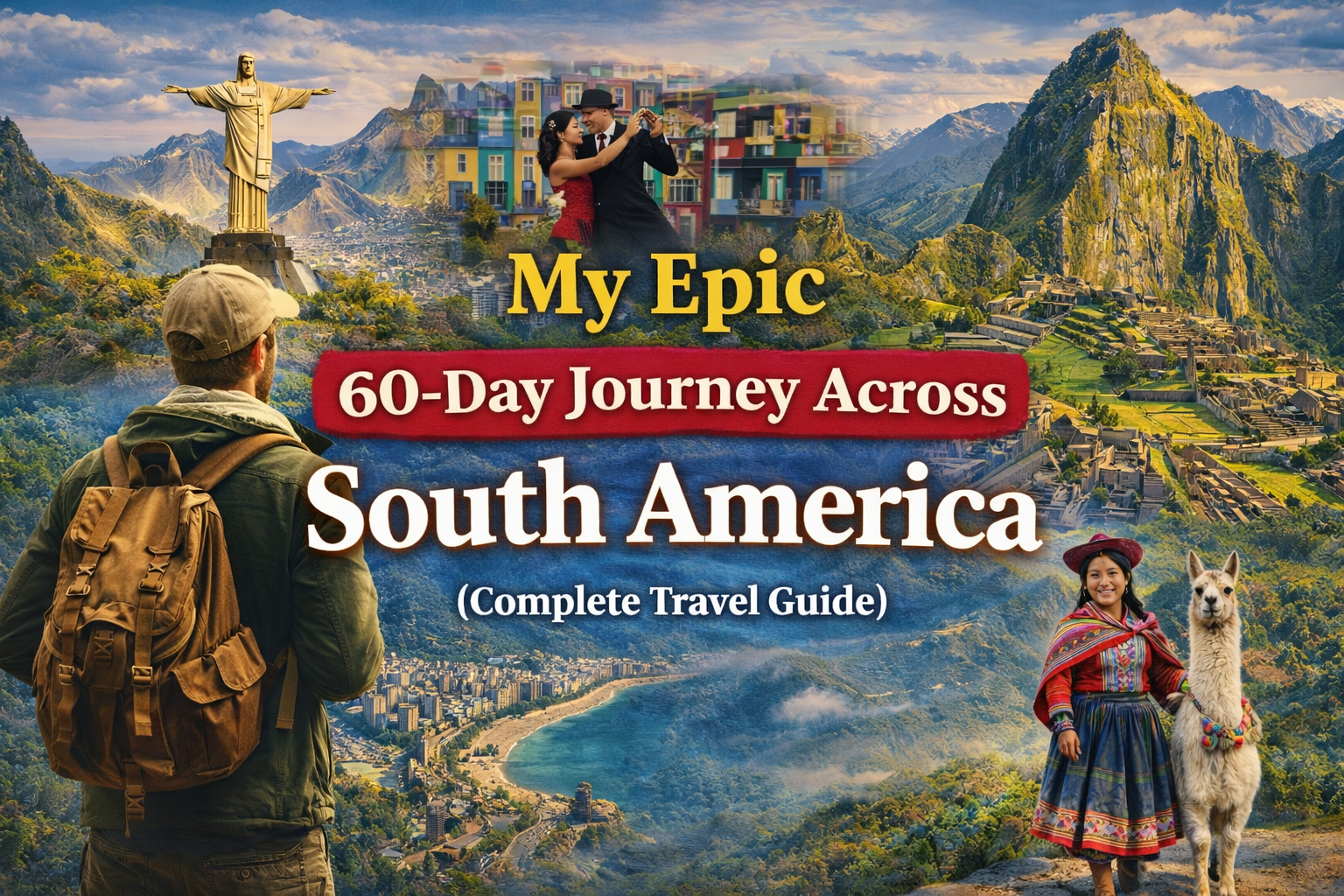
Table of Contents
- Before the Flight: The Moment It Started
- Las Vegas: The Unexpected Beginning (10 Days)
- Brazil: Where the World Feels Alive (10 Days)
- Uruguay: The Gift of Peace (10 Days)
- Argentina: A City with a Soul (10 Days)
- Chile: Where Opposites Find Balance (15 Days)
- Peru: Where Everything Led (15 Days)
- The Journey’s Practical Lessons
- What the 60-Day Journey Taught Me
- Coming Home
- The Final Question
Before the Flight: The Moment It Started
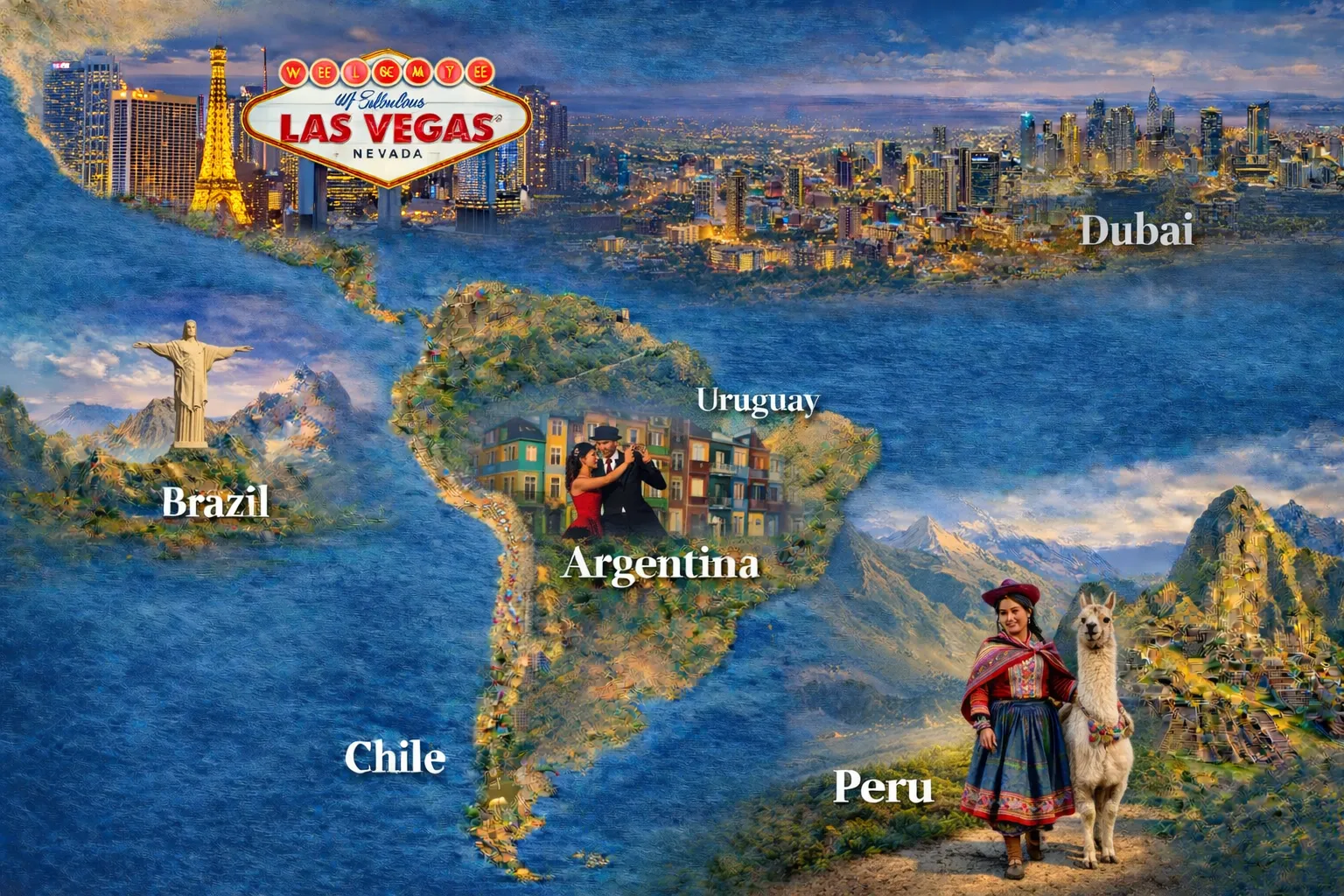
Before boarding the plane in Dubai, quiet tension sat in my chest. Some butterflies in my belly, too. It’s a mix too complex to describe, unless you've ever tried standing on the edge of something you’ve wanted for years. This was the very beginning of my 60-day journey , the one that could change you as a person, not just show monuments and beaches. Spanning North and South America, my itinerary was ambitious for sure. Dubai to Las Vegas for ten days, then south through Brazil, Uruguay, Argentina, Chile, and Peru. Each country, revealing itself in ways I couldn't have imagined. Five countries. Dozens of cities. Countless unknowns. But for a dreamer? That's just the beginning of infinity.
The truth is, I wasn't sure what would happen. Would I be homesick? Would I find what I was looking for? Did I even know what I was looking for?
And so I went… here’s my story, sprinkled with practical tips, tricks, and valuable information to use on your own adventure.
Las Vegas: The Unexpected Beginning (10 Days)
Las Vegas runs entirely on momentum. Loud, artificial, unapologetically excessive.
That’s why I chose it. For me, it was the perfect threshold before heading south. The movement, the lights, the sense that anything could happen here at any time gave me the right kind of jump-start.
Coming here was more about practical reasons. Convenient flight connections from Dubai and a chance to adjust to the time change before diving into South America. And I stayed for the energy!
Because once its pulsing life pulls you in, you don’t resist. I tried cuisines from almost every corner of the world: Korean BBQ, steakhouses, Thai fusions, and more. It’s a perfect warm-up, and a reminder that the world is vast, colorful, and different.
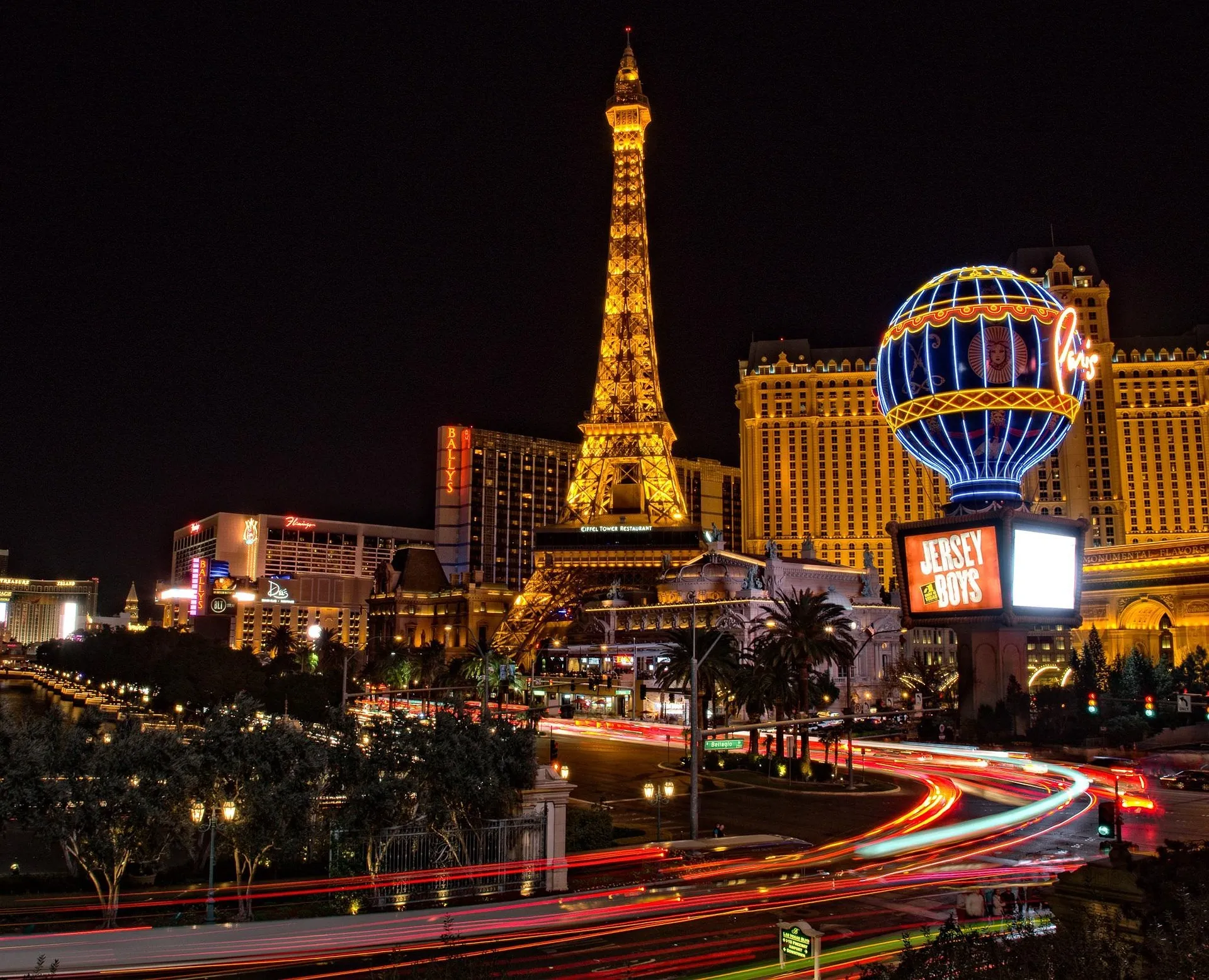
The city itself is everything you’d expect Vegas to be: loud, bright, restless. I explored the Strip on foot, dodging street performers and finding myself marveling at the Paris, Venice, and ancient Rome buildings on the street. Those slot machines didn’t stop, chiming at 3 a.m. or any other hour.
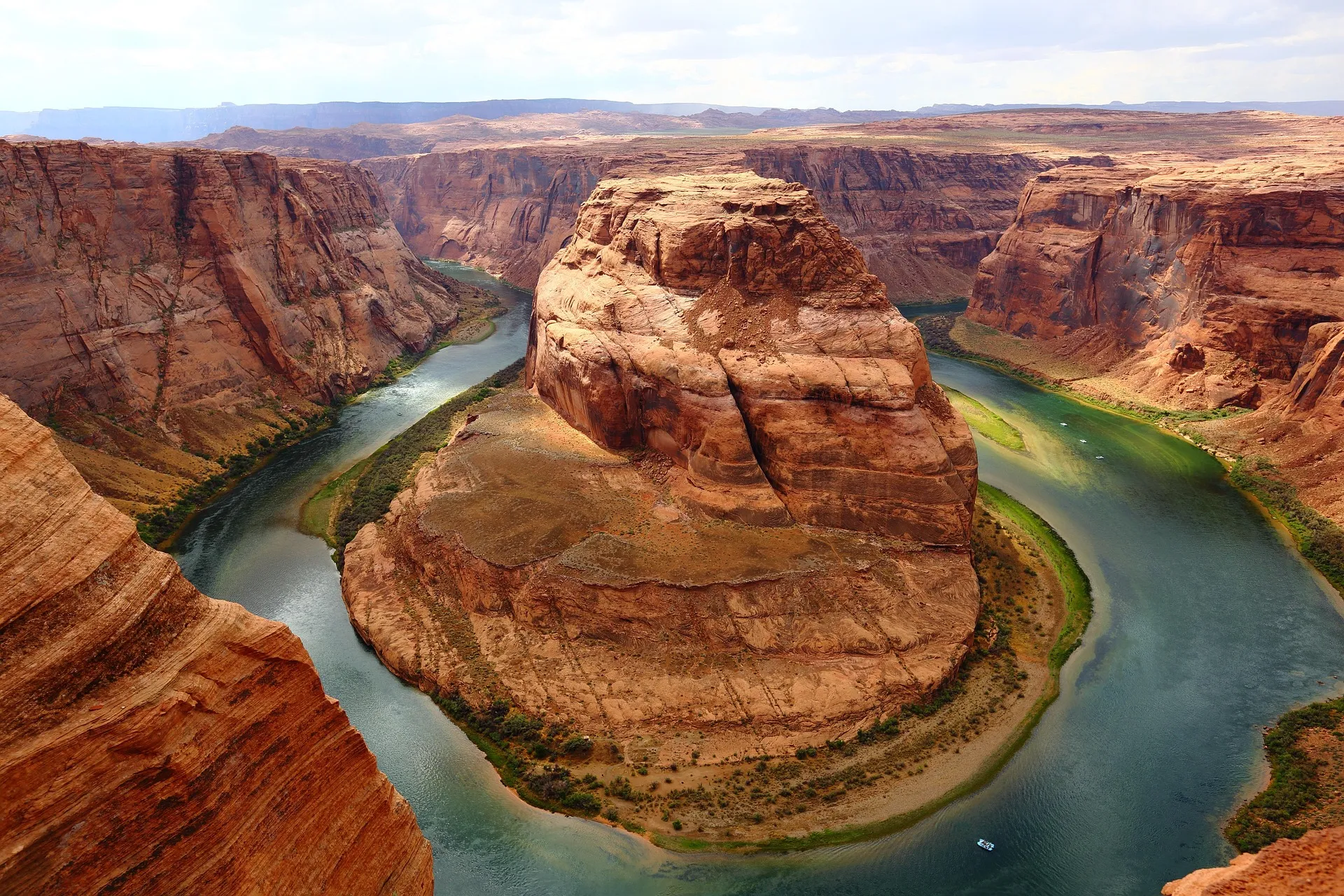
And then…The Grand Canyon moment came on day six. I booked a day trip to the South Rim. That’s the best viewpoint, at least locals assured me that. And they were right.
Standing at the edge of that ancient wound in the earth, I understood why some experiences refuse to be captured. The canyon swallowed sound. Wind moved across rock faces carved over millennia, and I felt small, but in a way that brought relief rather than fear.
The next morning, I boarded a long flight to Rio de Janeiro, trading neon for nature, spectacle for substance.
I left Las Vegas knowing the journey had truly begun.
Brazil: Where the World Feels Alive (10 Days)
Rio de Janeiro hit me like a wave.
The city felt different from anything I knew right away…it kinda shouts, sings, laughs, and dances all at once. If you’ve been there, you’ll probably agree!
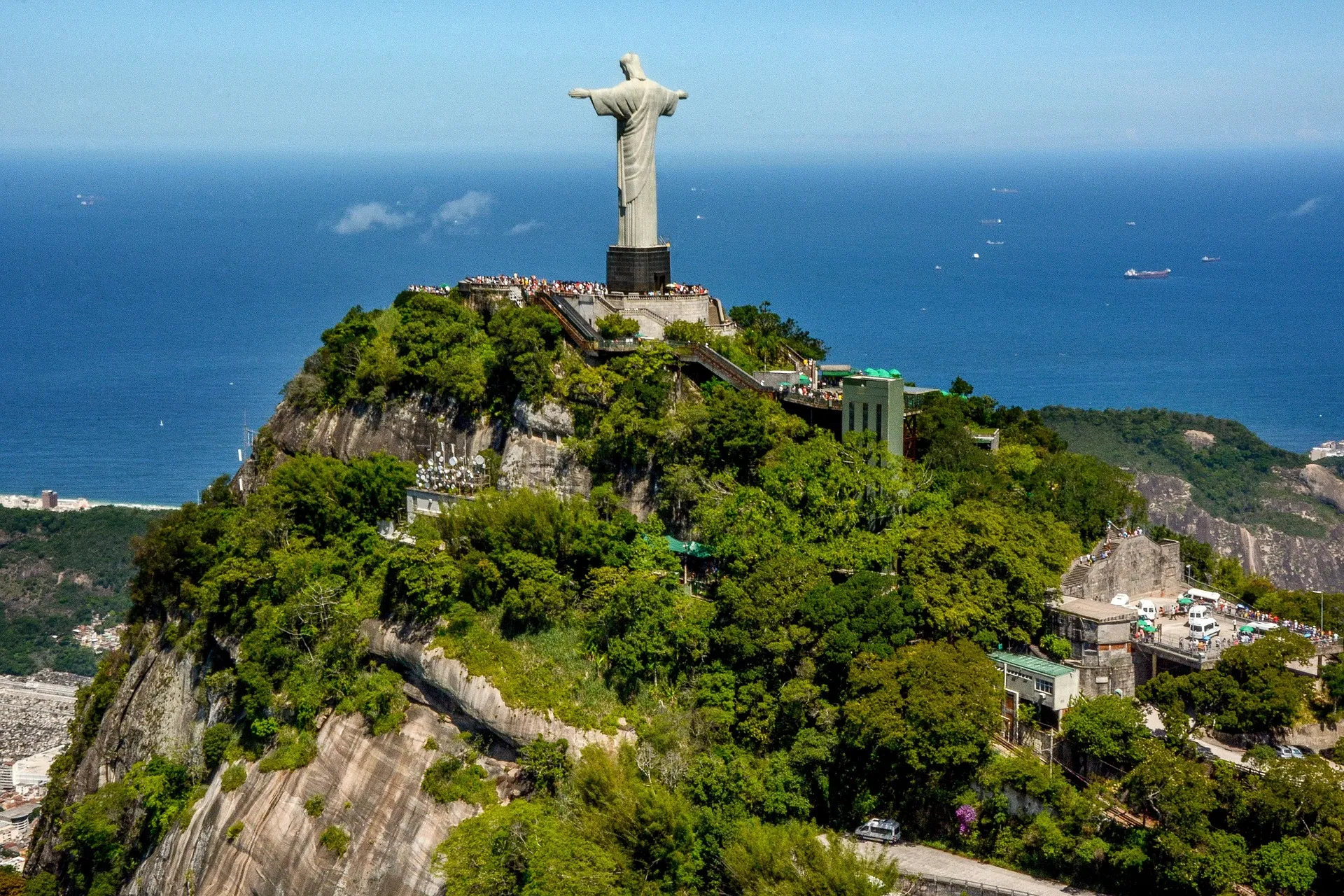
On the first morning, I saw Christ the Redeemer, one of the New Seven Wonders. And oh boy, oh boy. From up there, with Sugarloaf Mountain rising from Guanabara Bay, favelas climbing hillsides – impossibly beautiful. IG posts don't overbeautify. It's just that good.
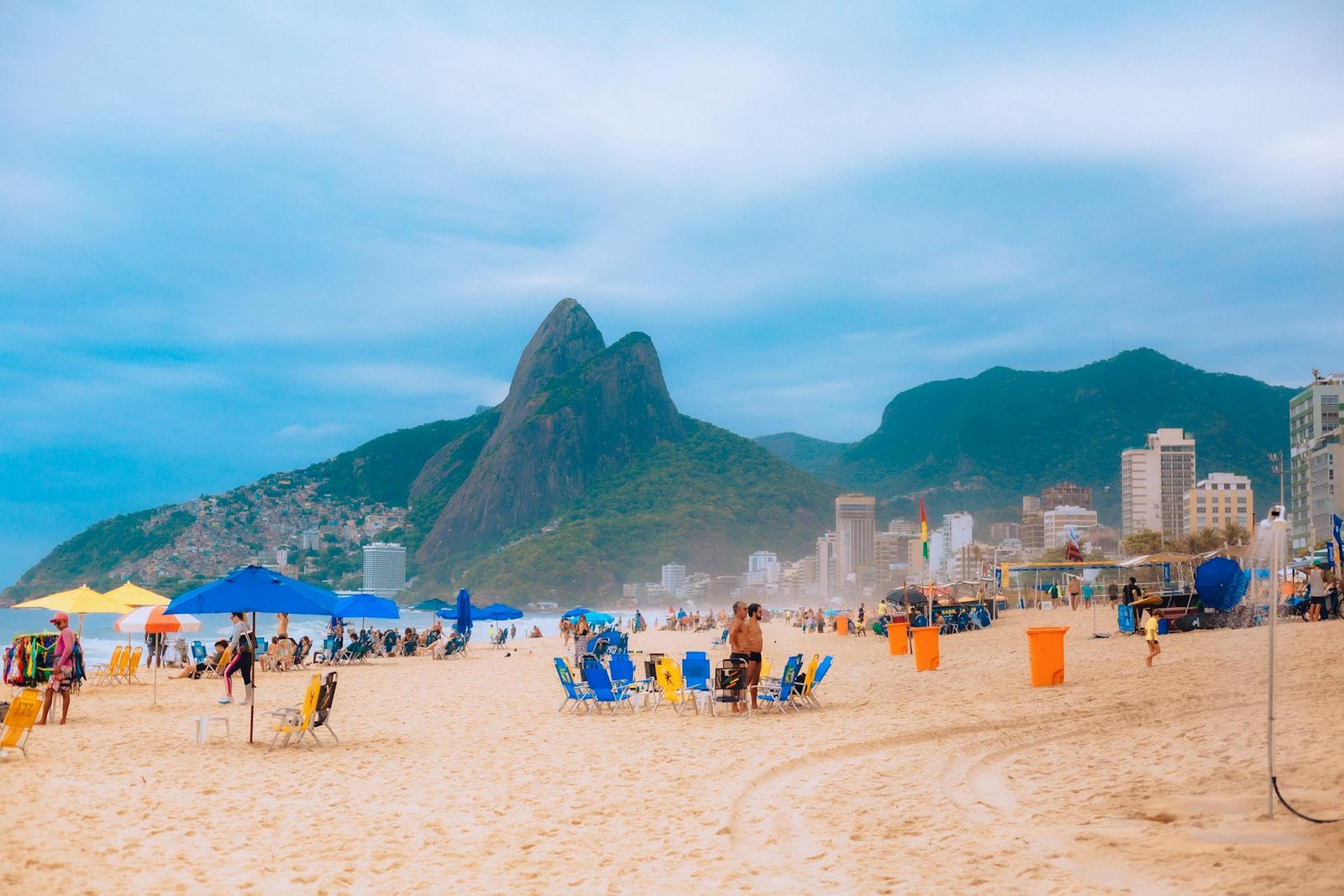
And what about the beaches? Those surely became my postcards… Copacabana and Ipanema were worth every minute spent. People-watching here could be a sport! Vendors sold everything from caipirinhas to bikinis. Volleyball games erupted spontaneously. Joggers, families, surfers, and tourists shared the same sand with remarkable harmony.
But the thing I loved the most… was actually on that first evening. Watching the sunset at Arpoador, between Ipanema and Copacabana, locals cheered when the sun touched the horizon. How, actually, cool is that?? Brazilian culture celebrates being alive. Not achievements, just being here, breathing, feeling.
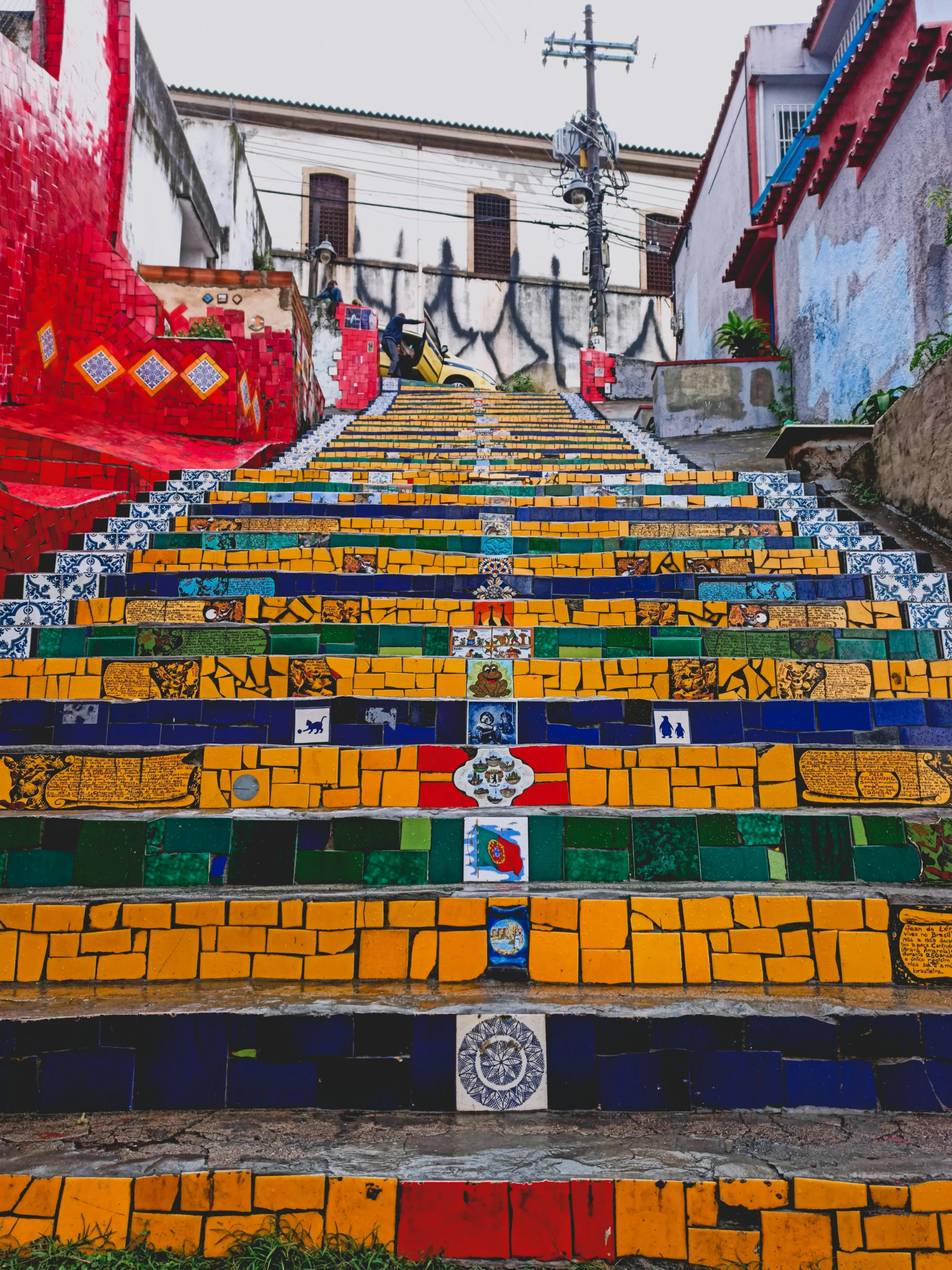
Once the sun sets, the nights belong to Lapa – music everywhere, the famous Selarón Steps glowing with tiles from sixty countries. A quick São Paulo trip confirmed: feijoada deserves its national dish status.
Rio taught me about living in the moment, though not without caution. The vibrant city life came with an edge. I used Uber everywhere (safer and affordable), avoided walking alone late at night in unfamiliar areas, and kept my phone close. Beauty and vigilance walked hand in hand. But that awareness heightened everything.
Before leaving, I learned basic Portuguese phrases: "obrigado," "por favor," "quanto custa?", and discovered they opened doors.
Brazilians appreciated the effort, and suddenly strangers became friends.
Safety + Practical Tip (Brazil)
- Transport: I used Uber everywhere—safer and affordable.
- Night walks: Avoid walking alone late at night in unfamiliar areas.
- Language: Learn basics like “obrigado,” “por favor,” and “quanto custa?”
Uruguay: The Gift of Peace (10 Days)
After Brazil's intensity, Uruguay felt like exhaling.
Montevideo demanded nothing from me. That’s how I like to describe my whole experience here. I explored the Old Town, wandering in a chill mode through colonial architecture. Finding cafés that felt like secrets was a fun side quest.
The Rambla de Montevideo stretched along the coast, a pathway for people who walked without hurrying. I joined them during sunset. Nobody seemed to rush. Nobody shouted. The peaceful destination I'd found was all about space. Uruguay is different. It's quieter, simpler, almost therapeutic.
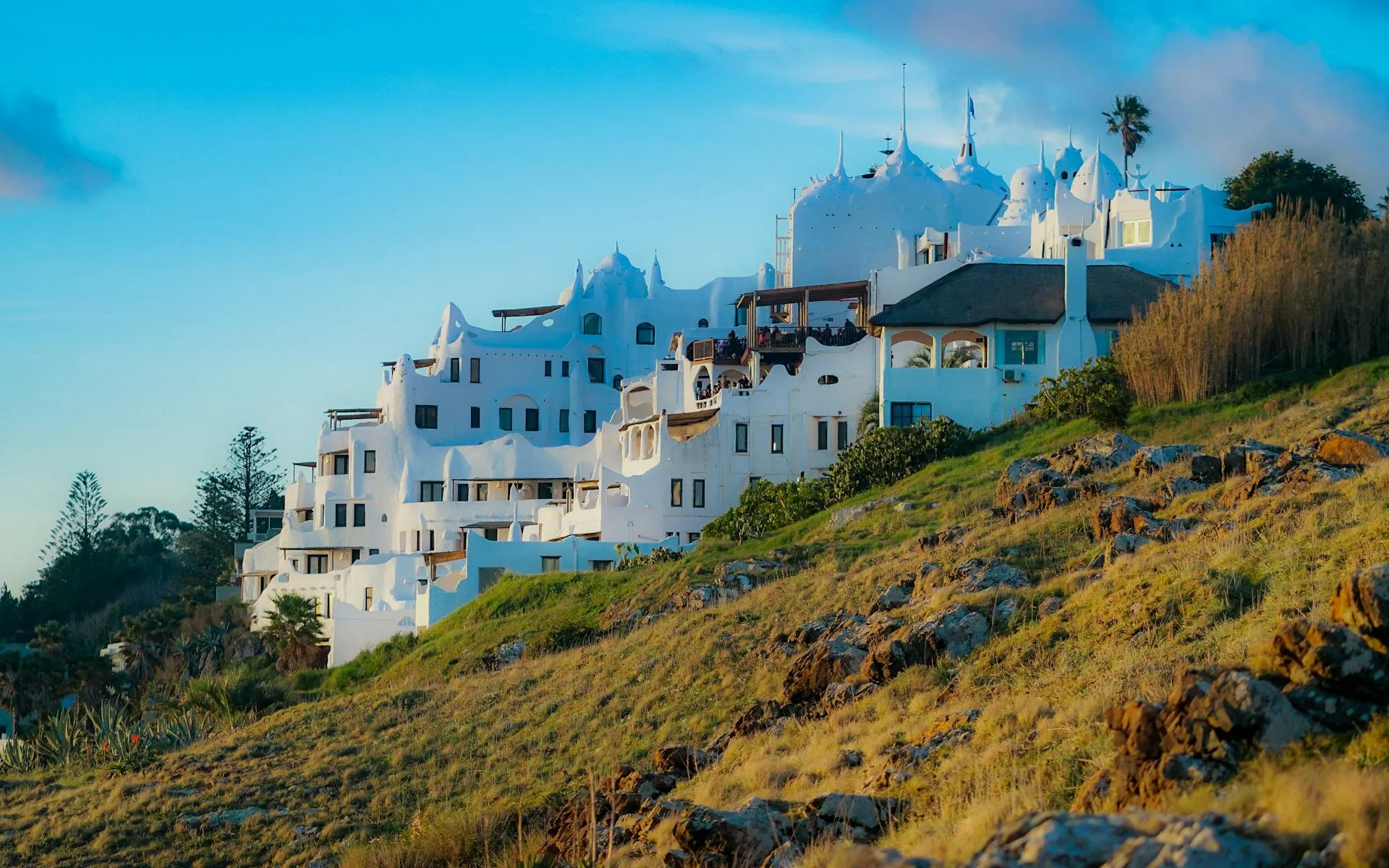
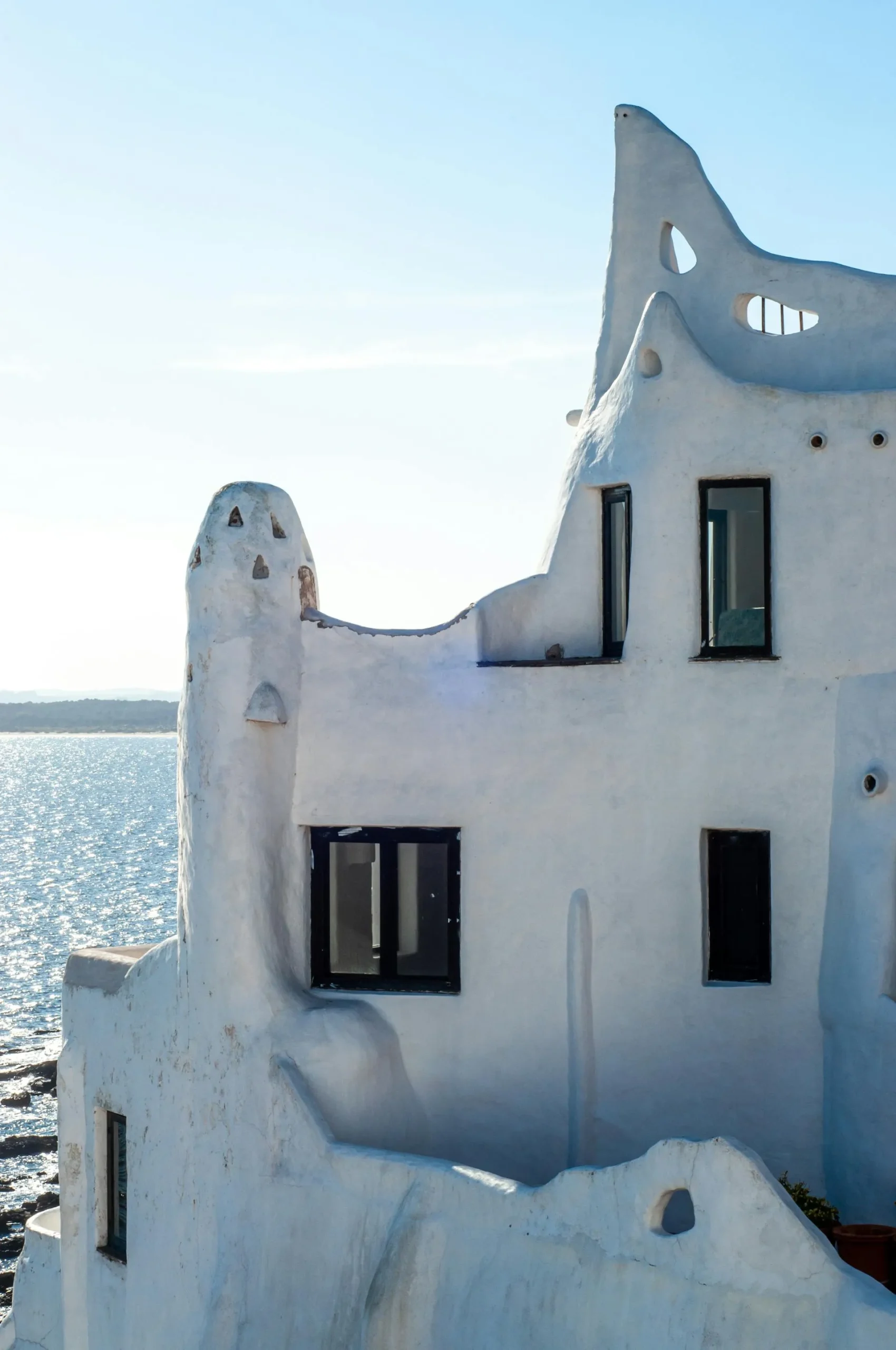
I spent three days in Punta del Este, the beach town everyone had told me about. And they were right! Clean beaches radiate a relaxed vibe that, in itself, encourages you to slow down. I visited Casapueblo, the stunning white cliffside building that seemed to have grown organically from the rock.
The country truly surprised me. I still am shocked by how safe and clean it felt. Public transportation was also reliable, a luxury in this region. Oh, and the cuisine… I tried chivito, the national sandwich, which turned out to be a magnificent heart attack on a plate: steak, ham, cheese, bacon, eggs, all somehow balanced on bread, almost spiritual kind of balance.
And one practical note: Uruguay is more expensive than its neighbors. I'd budgeted accordingly, but travelers coming from Brazil or Argentina might feel the shock. Worth it, though!
Budget Note (Uruguay)
Uruguay is more expensive than its neighbors. If you’re coming from Brazil or Argentina, expect a noticeable jump, but it was worth it for the comfort, safety, and calm.
Argentina: A City with a Soul (10 Days)
Buenos Aires culture grabbed me by the heart.
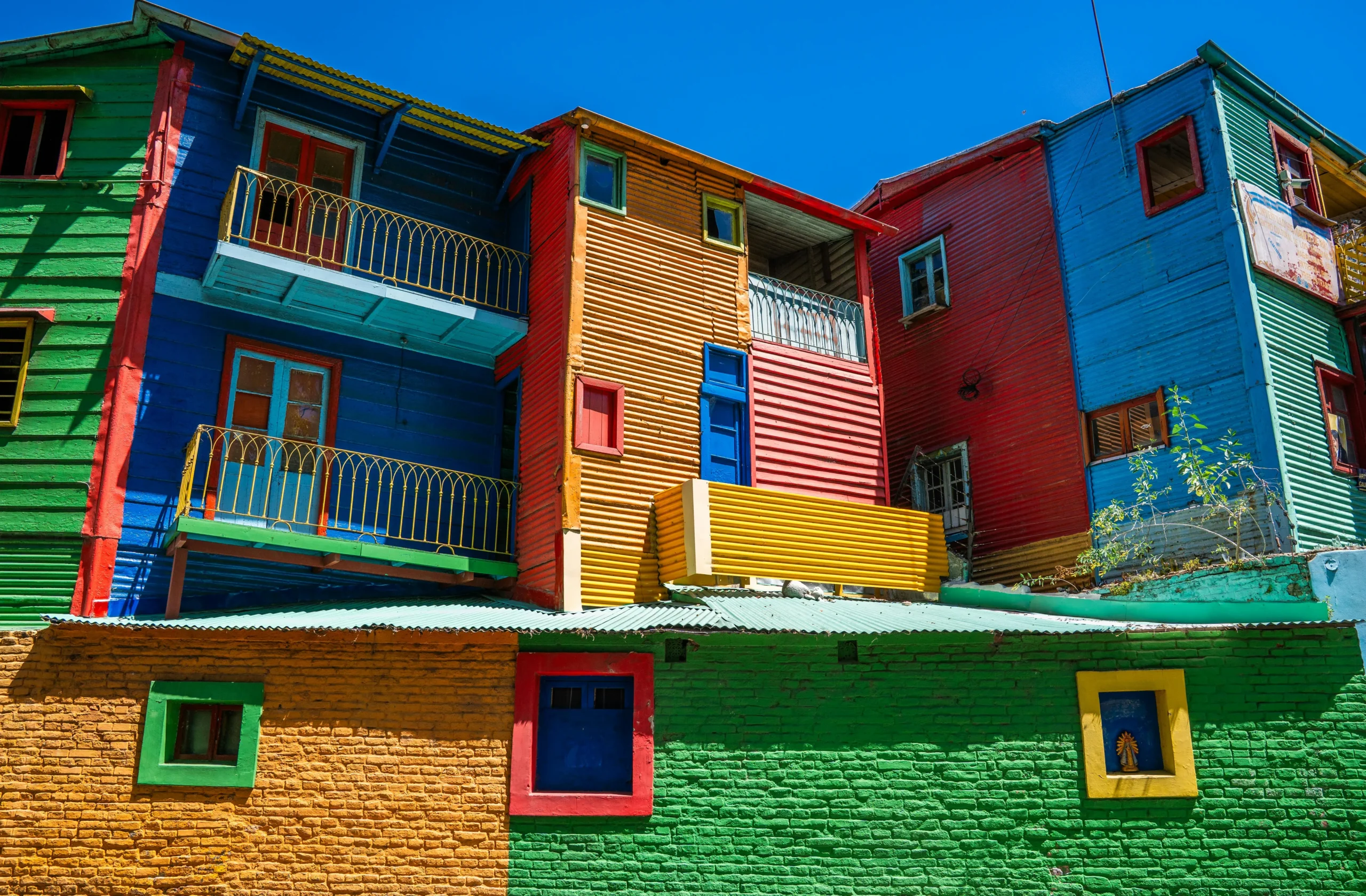
The city felt like walking through a poem that’s not the kind you read, but rather feel. I started in La Boca. Here, colorful houses lined Caminito street, and tango dancers performed for crowds that gathered naturally. The neighborhood wore its working-class history proudly, unashamed of its rough edges.
I spent an afternoon in one of the world’s most beautiful cemeteries, Recoleta Cemetery. Marble mausoleums felt like miniature mansions for the dead. I found Evita Perón's tomb, flowers still fresh, and understood why she remains Argentina's eternal first lady.
But what became my real home was Palermo. And it became that fast! The Palermo neighborhood sprawls across multiple distinct areas. Palermo Soho with its boutiques, Palermo Hollywood with its restaurants, and Palermo Woods with its lakes.
I spent days wandering with no plan, discovering cafés, tree-lined streets, bookstores that stayed open late, and restaurants where dinner started at 10 p.m., and conversations lasted until dawn.
One night, I remember well in particular. I watched Tango in a small venue. Floor creaked and dancers moved in unison, kinda telling the story through their bodies and sounds. That’s when I understood why tango is Argentina's soul made visible. It’s a confession, argument, seduction, passion, and more, all wrapped into movement.
I ate empanadas from street vendors and steak at parrillas. Meat melted on the tongue like butter, effortlessly. Dulce de leche appeared everywhere, in alfajores, on ice cream, straight from the jar.
Argentina also proved affordable for travelers. I used official taxis and Uber, both reliable and cheap by international standards.
And if you’ve been thinking, “wait, where’s the Iguazu Falls?”, you’re right to think that. I'd been tempted to visit Iguazu Falls indeed. It’s one of the most impressive waterfalls on Earth. But eighteen hours by bus made me choose depth over breadth. I'd rather know one city well than check boxes. Next time, for sure!
Argentina Tip
- Getting around: Official taxis and Uber were reliable and affordable.
- Trade-offs: I skipped Iguazu Falls this time (18 hours by bus) to go deeper in Buenos Aires.
Chile: Where Opposites Find Balance (15 Days)
Santiago Chile surprised me with its order.
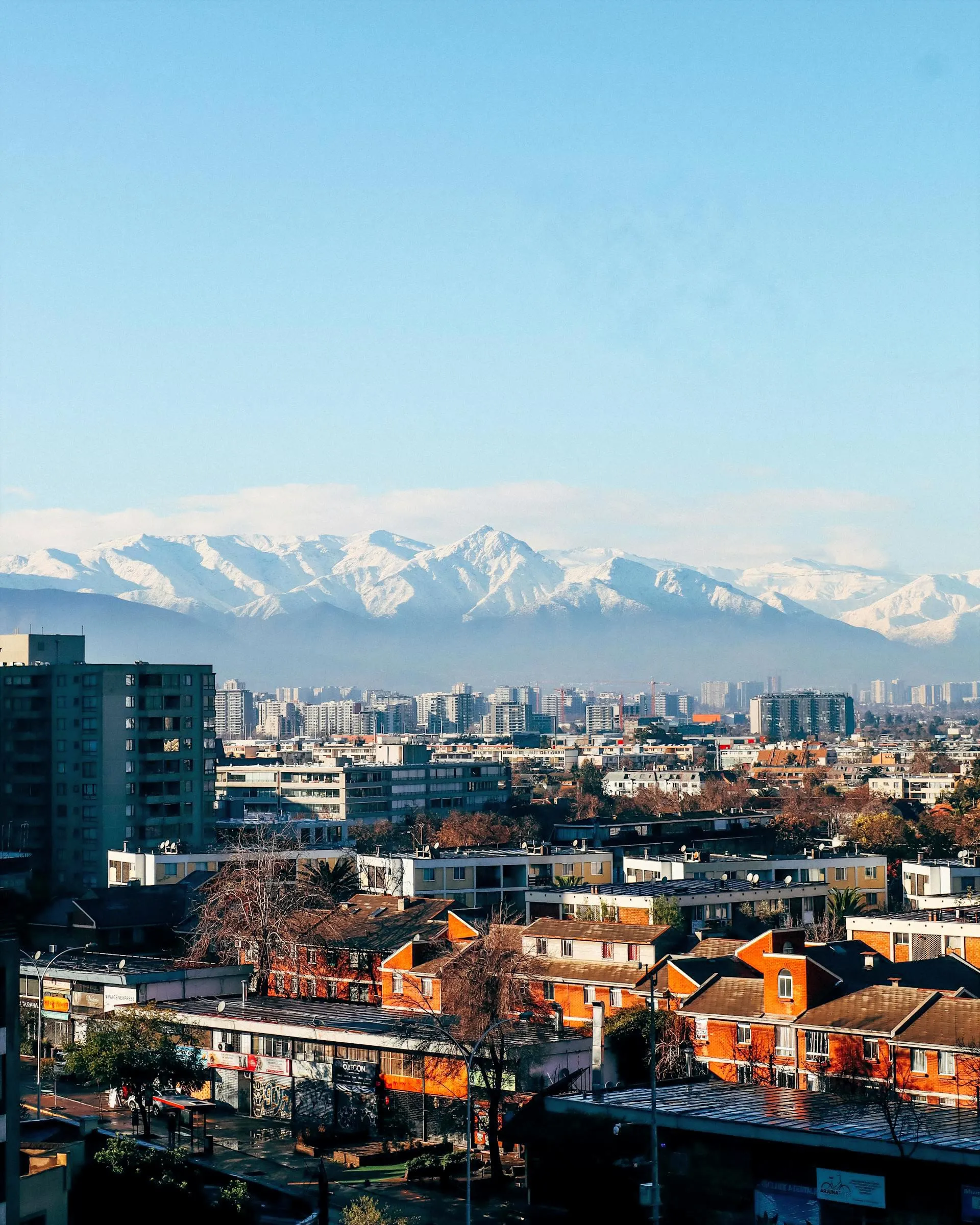
After Argentina's passionate chaos, Chile's capital felt refreshingly organized, almost jarring in its orderliness. Andes loomed at the edge of the city silently, yet snow-capped and eternal, a reminder that, beneath the modernity, nature still ruled.
I started exploring Plaza de Armas, the heart of the old city, where street performers were kinda in a competition with pigeons for space. I climbed San Cristóbal Hill for views of Santiago spread beneath the smog, the city stretching toward mountains on all sides. For the highest viewpoint in South America, I went to Sky Costanera.
But Valparaíso… Valparaíso was something else entirely.
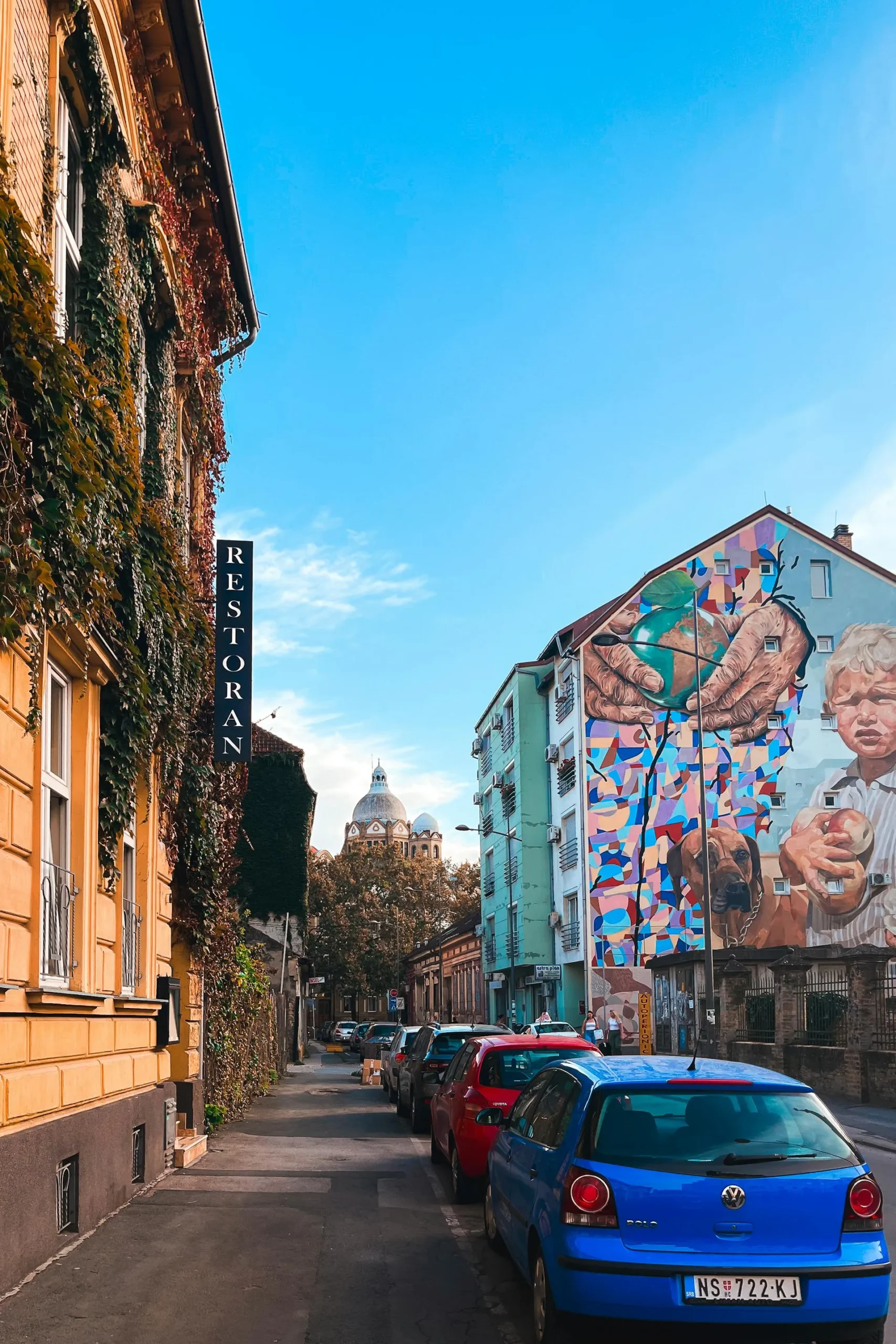
The port city climbed hills in defiance of logic. Houses painted in every imaginable color clung to the slopes at impossible angles. Valparaíso street art transformed entire buildings into murals—not graffiti, but deliberate, stunning artwork that made the city feel like an outdoor gallery. Funiculars rattled up and down, carrying locals who navigated the vertical city like it was the most natural thing in the world.
I spent afternoons in small cafés watching this colorful chaos unfold. Artists painted in doorways. Musicians played on corners. The city felt alive!
Alive in its own way. Not Rio's pulsing energy, but something more anarchic, more free. Chile gave me balance. Santiago's structure and Valparaíso's wildness showed me that you could hold both in the same country, the same week, the same heart.
I'd researched both the Atacama Desert and Patagonia, a dream destination for hikers, but Chile's length made me realistic. The country stretches 2,670 miles from north to south. Distances between cities are enormous, and domestic flights add up quickly. I booked flights early and chose to go deep rather than wide.
The food was lovely here. And as everywhere, it was different. Each country was giving it all through food. I tried pastel de choclo (corn pie) and completo (Chilean hot dog loaded with avocado, tomato, and mayo).
When it comes to safety, Chile felt safe, clean, and easy to navigate. After Brazil's edge and Argentina's intensity, Chile's predictability felt like a gift.
Peru: Where Everything Led (15 Days)
Peru was always the destination, though I didn't realize it was also the culmination.
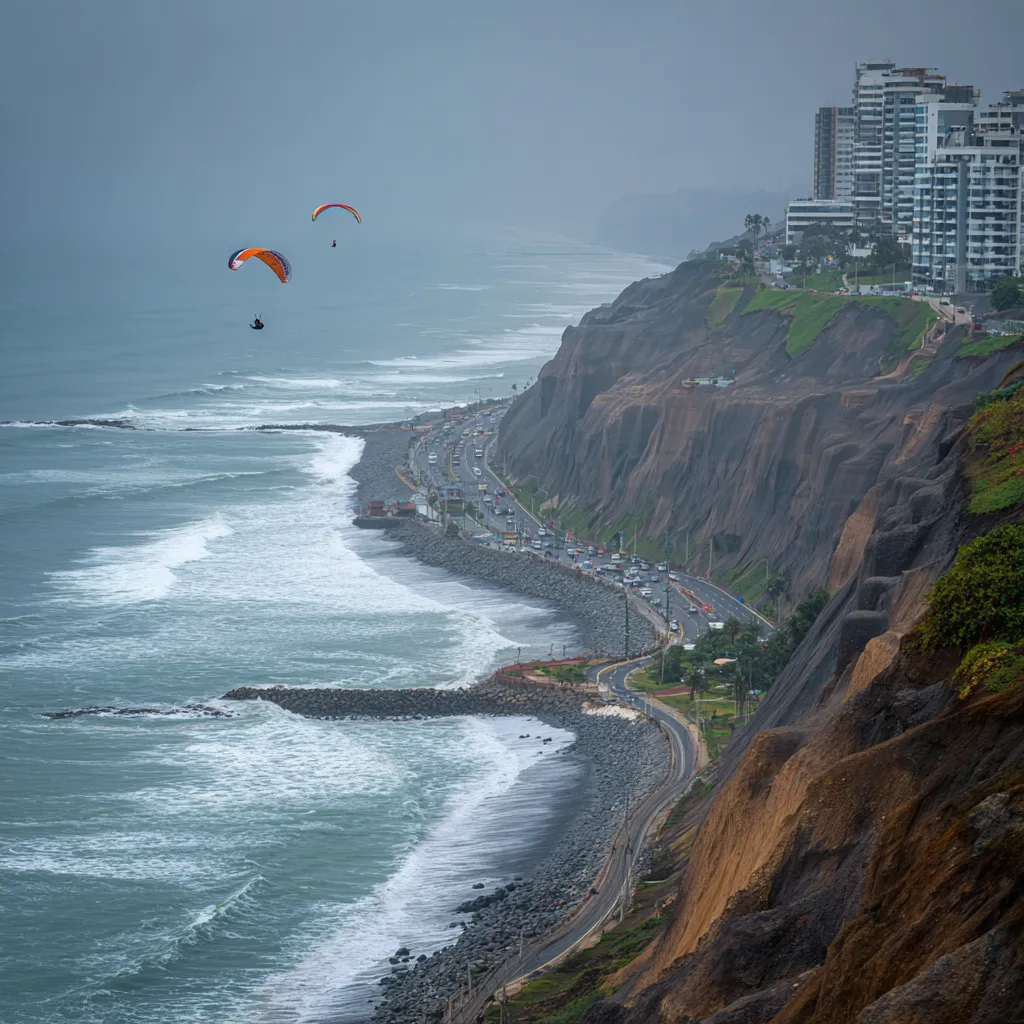
I finally stood in Lima, where world-class food meets coastal views. The city sprawls along cliffs overlooking the Pacific, and I spent evenings in Miraflores watching paragliders launch themselves into empty air. I ate ceviche in small restaurants where the fish had been swimming hours earlier. I tried lomo saltado, the stir-fried beef dish that tastes both Peruvian and Chinese. Peru's food scene alone justified the entire trip. But there was more. Cusco was calling.
The flight from Lima took an hour, and I felt the altitude immediately. At 11,150 feet, Cusco demands respect. I spent two days acclimatizing, walking slowly, drinking coca tea, but the city helped. It has a vivid, kinda healing mix of Inca and Spanish architecture, every street a reminder that two empires had collided here.
From Cusco, I explored the Sacred Valley. Ollantaytambo. Pisac. Ancient ruins and scenic landscapes made me understand why the Incas chose this place. The valley produced everything they needed, from water and flat land for agriculture to protection from enemies.
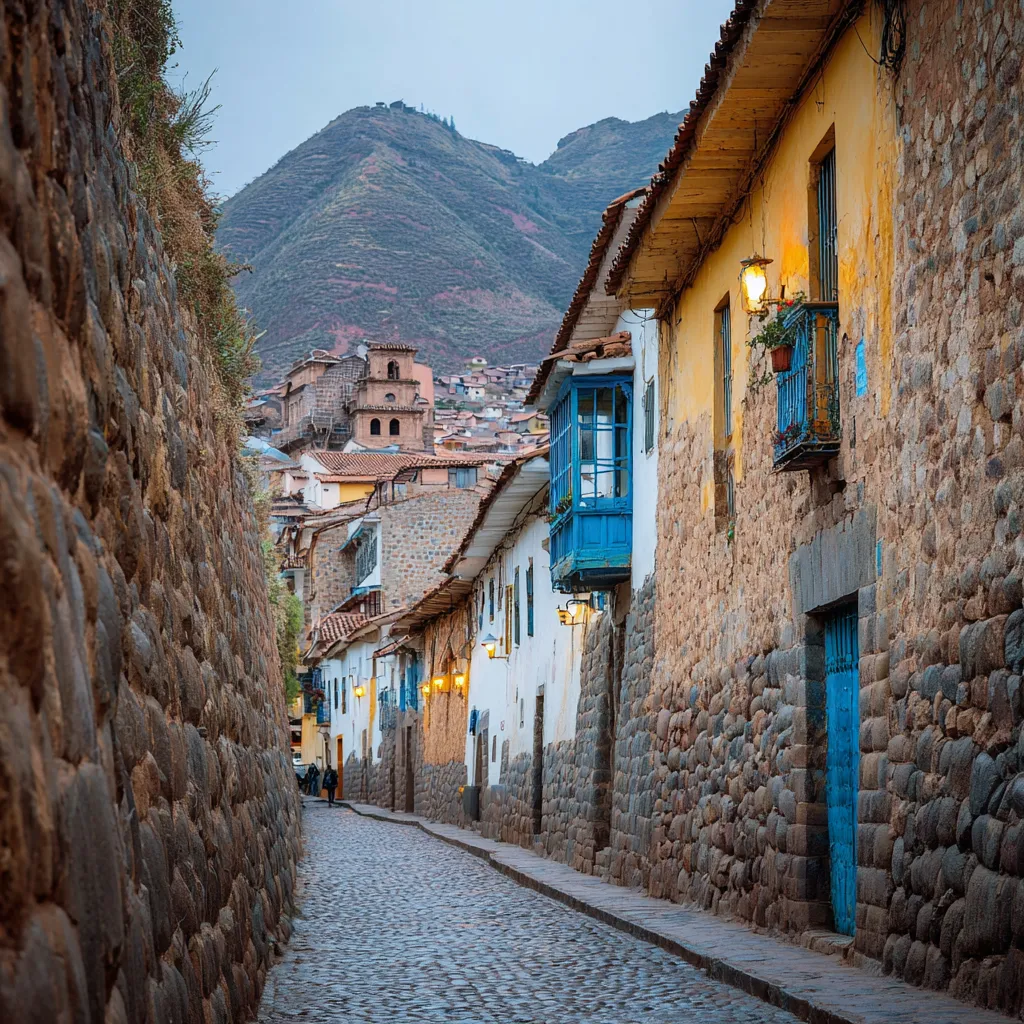
Then came Machu Picchu.
TI'd booked tickets weeks in advance as they tend to sell out, and there's no day-of access. The train went through the Sacred Valley as dawn broke. Mist rose from the Urubamba River. Mountains older than memory surrounded us. I felt the altitude in my lungs and the anticipation in my chest. The culmination was here!
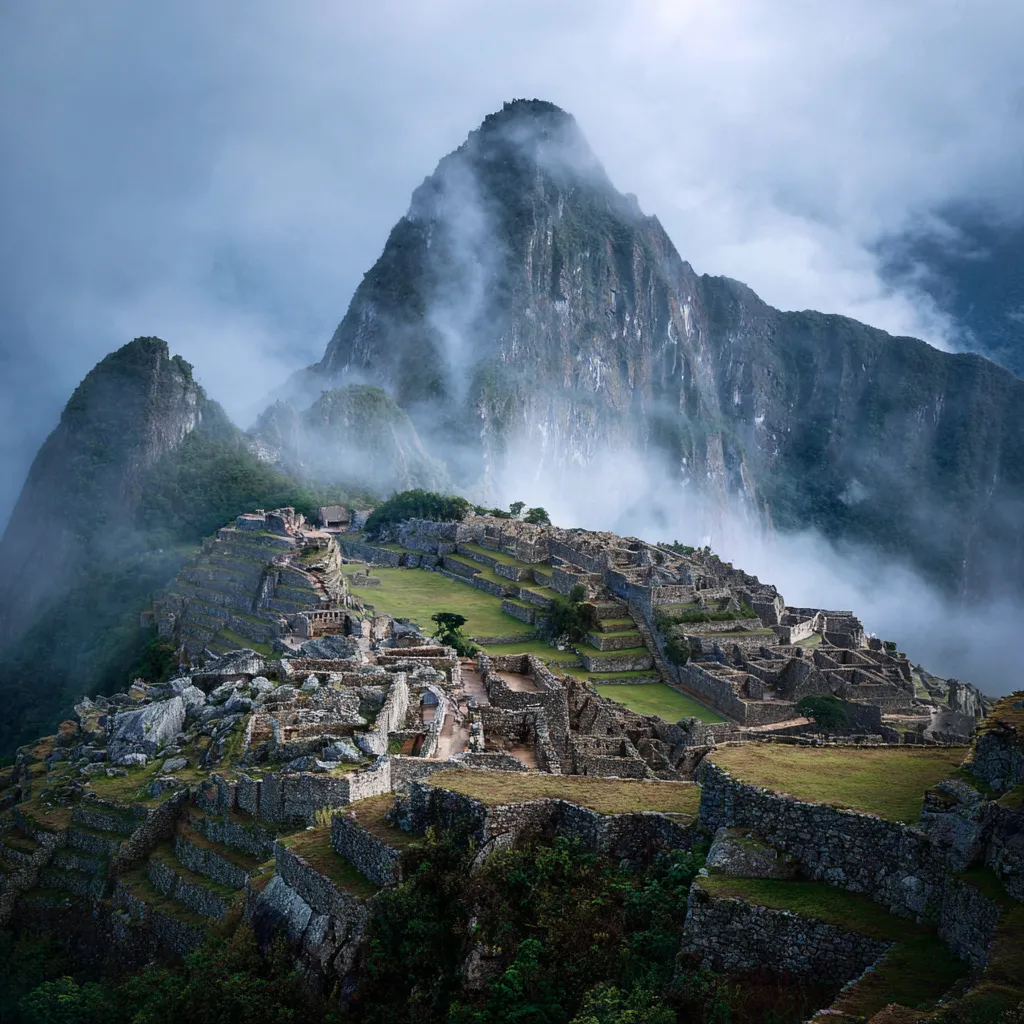
Then I climbed those final steps and saw it.
The ancient city sat exactly where it had sat for centuries, tucked between peaks, clouds moving through the ruins like ghosts. I understood why people speak of Machu Picchu in hushed tones. Some places command reverence not through size but through presence.
Standing there, I thought about the ancient civilizations that built this. How they carried stones up mountains. How they understood the movement of stars and created beauty that would outlive them.
This was the perspective shift I needed. The world is bigger than I'd imagined. Time is longer. My problems are smaller.
The Peru culture I encountered in Cusco's markets, in conversations with locals, in the food that tasted like the land itself felt authentic and not performed for tourists. I used official taxis and the Beat app (Peru's equivalent of Uber) and kept cash for small towns that didn't accept cards. I learned basic Spanish, not fluently, but enough to navigate, to ask questions, and to say thank you.
Peru Tip
- Tickets: Book Machu Picchu weeks ahead (popular routes sell out).
- Apps: Use official taxis and the Beat app; keep cash for small towns.
- Language: Basic Spanish goes a long way in markets and transport.
The Journey’s Practical Lessons
If you're planning a multi-country trip across South America, here’s what I learned:
- Give yourself time: Sixty days felt right. Forty-five minimum if you want to avoid rushing. Each country deserves more than a few days.
- Learn basic Spanish: It works everywhere except Brazil (where Portuguese rules). Even fumbling through phrases opens doors.
- Use trusted transportation: Uber operates in most major cities. It's safer than street taxis and usually affordable.
- Pack for all seasons: South America's climates vary wildly. I went from beach weather in Rio to altitude cold in Cusco.
- Keep cash: C Cards work in cities, but small towns operate on physical money.
- Stay connected: I bought local SIM cards in each country. Worth it for maps alone.
💰 Approximate Budget Breakdown. How Much Did the 60-Day Journey Cost?
One of the most common questions I get is: “How much did this entire trip actually cost?” The honest answer is it depends on your travel style. But to give you a realistic idea, here’s a breakdown based on my personal experience traveling comfortably but not luxuriously.
- ✈ Flights (Dubai → Las Vegas → South America → Return): Around $2,500. This included long-haul international flights and a few regional connections. Booking early and being flexible with dates made a huge difference.
- 🏨 Accommodation ($30–80 per night): $1,800 – $4,800 for the entire trip. I stayed mostly in well-rated hotels, guesthouses, and the occasional private apartment. Prices were very reasonable across South America, especially in Argentina and Peru.
- 🍽 Food ($10–25 per meal): Around $1,800 – $4,500. Street food and local restaurants were incredibly affordable, especially in Brazil and Peru. I mixed budget meals with occasional nice dinners.
- 🚕 Transportation (local travel): $500 – $1,000. This covered Uber, buses, metro systems, and short intercity trips. Public transport in most countries was safe, cheap, and reliable.
- 🎟 Activities & Experiences: $20–100 per activity. Prices varied widely, from walking tours to big-ticket experiences like Machu Picchu or guided excursions.
💡 Travel Tip: Book major attractions early (especially Machu Picchu and popular shows), but leave space in your itinerary for spontaneity. Some of the best moments happened when I didn’t plan anything at all.
Overall, South America offers incredible value for money. With smart planning, you can travel comfortably, experience world-class destinations, and still stay within a reasonable budget, even on a long journey like this one.
What the 60-Day Journey Taught Me
Each country gave me something I didn’t know I needed:
- Brazil gave me energy and the permission to feel things fully, to celebrate existence.
- Uruguay gave me peace and the space to hear myself think, to unwind tension I didn't know I carried.
- Argentina gave me a culture that reminded me how beauty matters, how emotion is worth expressing.
- Chile proved to me that opposites can coexist, that order and chaos both have their place.
- Peru gave me perspective with an understanding that I'm part of something larger, something ancient and enduring.
This trip was self-discovery disguised as geography.
Coming Home
I knew backpackers often feel this way after a long trip. Now, I can confirm it: I landed back in Dubai with the same backpack but not the same person carrying it.
The personal reflections that emerged didn't arrive all at once. They came quietly, in the weeks after returning. I noticed I was more patient. More open. More grateful for small things, such as morning coffee, familiar streets, and conversations with friends. The trip showed me new places – yes, but it also revealed new parts of myself
I now believe that journeys like this aren't escapes from real life. They're the most real life gets. They're what happens when you stop planning every moment and start living each one, when you exchange comfort for experience, when you choose transformation over safety.
The world is bigger than we think. Our daily worries are smaller than they feel. And somewhere between the Grand Canyon's silence and Rio's music, between Uruguay's peace and Peru's mountains, I found myself changed, opened, grateful to have gone and even more grateful to have returned.
Plan Your Own 60-Day Adventure
Use a simple itinerary, compare flight options, and keep your trip flexible while still booking the “must-do” experiences early.
Start Planning Your TripThe Final Question
The question isn't whether you'll be changed. The question is whether you're ready to be.